

Holism vs Reductionism in Psychology: Complete Guide

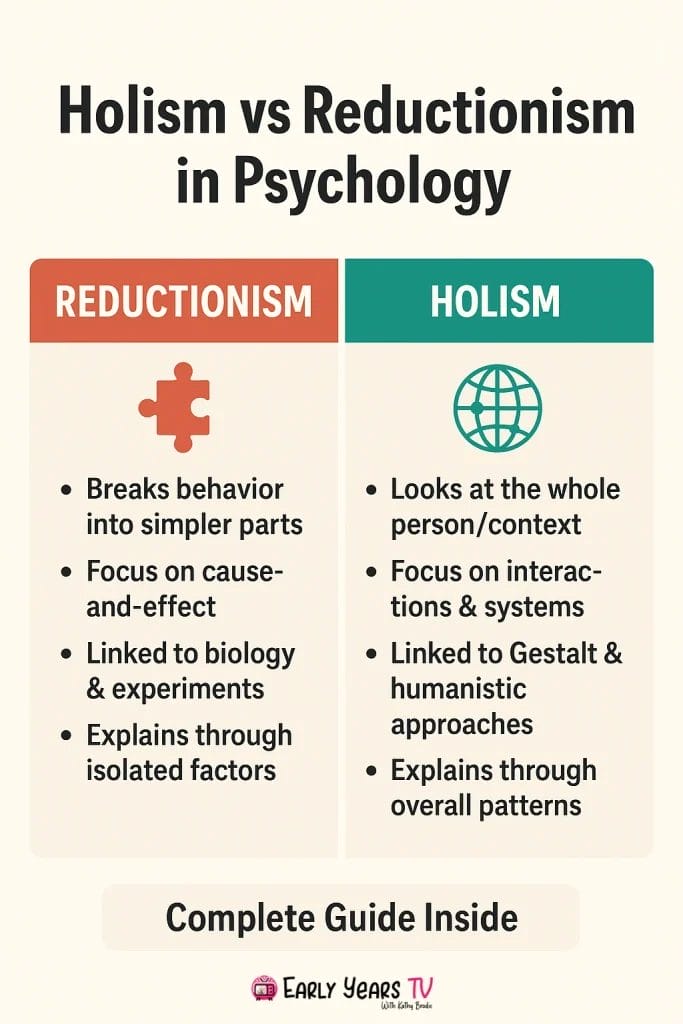
Modern neuroscience reveals that depression involves complex interactions between 300+ brain regions, yet the most effective treatments often target single neurotransmitter systems—illustrating psychology’s fundamental debate between understanding wholes versus parts.
Key Takeaways:
- What’s the difference between holism and reductionism? Reductionism breaks complex behaviors into individual components (like studying specific brain chemicals), while holism examines whole systems and interactions (like how biology, psychology, and social factors work together to influence behavior).
- Which approach is more effective for understanding psychology? Both approaches offer essential but different insights—reductionism provides scientific precision and targeted treatments, while holism captures real-world complexity and context. Modern psychology integrates both through models like the biopsychosocial approach.
- How do these approaches apply to real psychological problems? Depression illustrates both perspectives: reductionist research identifies neurotransmitter imbalances leading to targeted medications, while holistic approaches address the complex interaction of biological, psychological, and social factors for comprehensive treatment.
Introduction
Psychology faces a fundamental question that shapes how we understand human behavior: Should we break down complex mental processes into smaller, measurable parts, or study them as complete, interconnected wholes? This ancient debate between reductionism and holism continues to influence every branch of psychological science, from how we study memory and learning to how we treat mental health conditions.
The reductionist approach seeks to understand behavior by examining individual components – neurons firing, chemicals releasing, specific behaviors occurring. In contrast, the holistic approach argues that human experience emerges from the dynamic interaction of multiple factors working together, creating something greater than the sum of its parts. Understanding both perspectives is essential for anyone studying psychology, whether you’re an A-level student preparing for exams or simply curious about how psychologists make sense of the human mind.
This comprehensive guide explores the fundamental differences between these approaches, examines how each contributes to our understanding of psychology, and reveals why modern psychology increasingly recognizes that both perspectives offer valuable insights. We’ll discover how concepts like Jean Piaget’s theory of cognitive development exemplify different approaches to understanding how children think and learn, and how broader philosophical debates like the nature vs nurture debate connect to these fundamental questions about human development and behavior.
Understanding the Basics: What Are Holism and Reductionism?
Defining Reductionism in Psychology
Reductionism in psychology is the approach of understanding complex behaviors and mental processes by breaking them down into their simplest, most basic components. Think of it like taking apart a complex machine to understand how each piece contributes to the whole. Reductionist psychologists believe that by studying individual elements – whether they’re brain chemicals, specific behaviors, or isolated cognitive processes – we can build a complete picture of how the mind works.
This approach has several key characteristics that make it particularly appealing to scientific psychology. Reductionism allows researchers to isolate variables, creating controlled experiments that can demonstrate clear cause-and-effect relationships. For example, a reductionist studying depression might focus specifically on neurotransmitter levels like serotonin, examining how changes in brain chemistry directly affect mood and behavior.
The reductionist approach also promotes parsimony – the scientific principle that simpler explanations are generally better than complex ones. Rather than considering dozens of interacting factors, reductionism seeks the most fundamental level of explanation. This might involve studying behavior at the biological level (genes, brain structure, hormones), the behavioral level (observable actions and responses), or the cognitive level (individual thought processes and memory systems).
Defining Holism in Psychology
Holism takes the opposite approach, arguing that “the whole is greater than the sum of its parts.” This famous phrase, originating from Gestalt psychology, captures the essence of holistic thinking: that human behavior and experience emerge from the complex interaction of multiple factors working together, creating new properties that cannot be understood by examining individual components alone.
Consider how you recognize a friend’s face in a crowd. A reductionist might study individual features – the shape of the nose, the color of the eyes, the curve of the lips. But holistic psychology argues that facial recognition emerges from the overall pattern and relationship between features, something that disappears when you break the face down into separate components. This emergent property – the recognition of the whole face – cannot be predicted from studying individual features in isolation.
Holistic psychology emphasizes context, relationships, and systems thinking. It recognizes that human behavior occurs within multiple interconnected systems – biological, psychological, social, and cultural – that constantly influence each other. A holistic approach to understanding a child’s learning difficulties, for example, would consider not just their cognitive abilities, but also their family relationships, school environment, cultural background, physical health, and emotional well-being.
Table 1: Quick Comparison – Holism vs Reductionism Basics
| Aspect | Reductionism | Holism |
|---|---|---|
| Focus | Individual components | Whole systems and interactions |
| Method | Break down into parts | Study interconnected wholes |
| Explanation | Simple, single-factor | Complex, multi-factor |
| Research Approach | Controlled, isolated variables | Natural, contextual studies |
| Key Principle | Sum of parts explains whole | Whole is greater than sum of parts |
| Examples | Studying individual neurons | Studying entire social systems |
The Historical Development of Both Approaches
Origins of Reductionist Thinking
Reductionist thinking in psychology has deep roots in the scientific revolution of the 17th and 18th centuries. As natural sciences like physics and chemistry achieved remarkable success by breaking down complex phenomena into measurable components, early psychologists naturally adopted similar approaches. The scientific method’s emphasis on control, measurement, and replication perfectly aligned with reductionist principles.
Wilhelm Wundt, often called the father of experimental psychology, established the first psychology laboratory in 1879 using reductionist methods. He attempted to break down conscious experience into its most basic elements – sensations, feelings, and images – through a process called introspection. This approach, known as structuralism, sought to create a “periodic table” of consciousness, identifying the fundamental building blocks of mental experience.
The rise of behaviorism in the early 20th century represented another triumph of reductionist thinking. John B. Watson and later B.F. Skinner argued that psychology should focus only on observable behaviors, ignoring internal mental states that couldn’t be directly measured. They developed principles of learning based on simple stimulus-response relationships, demonstrating how complex behaviors could be understood through basic conditioning processes. This approach differed significantly from more holistic educational philosophies like Rudolf Steiner’s holistic approach, which emphasized the importance of addressing the whole child across multiple developmental domains.
Rise of Holistic Perspectives
Holistic thinking in psychology emerged as a reaction against the limitations of early reductionist approaches. The Gestalt psychology movement, founded in Germany in the early 1900s, provided the first major challenge to reductionist thinking. Max Wertheimer, Wolfgang Köhler, and Kurt Koffka argued that perception and cognition could not be understood by breaking them down into individual sensations or responses.
The famous Gestalt demonstrations revealed how our minds organize sensory information into meaningful wholes. The triangle you see in three connected lines, the melody you hear in a sequence of notes, the movement you perceive in rapidly changing static images – all of these emerge from the relationship between components, not from the components themselves. These insights suggested that consciousness has emergent properties that cannot be predicted from studying individual elements.
Systems theory, developed in the mid-20th century, provided another foundation for holistic psychology. Biologist Ludwig von Bertalanffy proposed that living systems – including human beings – are best understood as complex, self-regulating wholes that maintain themselves through constant interaction with their environment. This thinking influenced family therapy, social psychology, and developmental psychology, encouraging psychologists to study individuals within their broader contexts and relationships.
Research from leading educational institutions has shown that Gestalt principles continue to influence how we understand perception, learning, and problem-solving, demonstrating the enduring value of holistic approaches to psychological phenomena.
Types and Levels of Reductionism
Biological Reductionism
Biological reductionism, also known as neurological or physiological reductionism, explains psychological phenomena in terms of biological processes. This approach focuses on how brain structure, neurotransmitter activity, hormones, and genetic factors influence behavior and mental states. Biological reductionism has achieved remarkable success in understanding many psychological conditions, particularly in the areas of mental health and cognitive function.
Modern neuroscience provides compelling examples of biological reductionism in action. Researchers have identified specific brain regions associated with different functions – the amygdala for fear processing, the hippocampus for memory formation, Broca’s area for speech production. Advanced brain imaging techniques allow scientists to observe neural activity in real-time, linking specific patterns of brain activation to particular behaviors or mental states.
The success of psychopharmacology – using medication to treat psychological conditions – demonstrates the practical value of biological reductionism. Antidepressants that target serotonin systems, antipsychotics that affect dopamine pathways, and stimulants that influence norepinephrine and dopamine have transformed the treatment of mental illness. These treatments work by modifying specific biological mechanisms, supporting the reductionist view that complex psychological states can be understood and treated at the biological level.
Environmental Reductionism
Environmental reductionism explains behavior primarily through learning processes and environmental influences. This approach, heavily influenced by behaviorism, focuses on how conditioning, reinforcement, and environmental stimuli shape behavior. Environmental reductionists argue that most human behavior results from learned associations between stimuli and responses, reinforced through experience.
Classical conditioning, discovered by Ivan Pavlov, demonstrates how automatic responses can be learned through association. A child who becomes afraid of dogs after being bitten has learned to associate dogs (conditioned stimulus) with danger and pain (unconditioned stimulus), producing fear (conditioned response). This simple mechanism can explain many complex emotional and behavioral responses.
Operant conditioning, developed by B.F. Skinner, shows how behaviors are shaped by their consequences. Behaviors followed by positive outcomes become more likely to occur, while behaviors followed by negative outcomes become less likely. This principle has been applied successfully in education, therapy, and behavior modification programs, demonstrating how environmental factors can systematically change behavior.
Experimental Reductionism
Experimental reductionism involves breaking down complex psychological phenomena into isolated variables that can be studied in controlled laboratory conditions. This approach prioritizes internal validity – ensuring that observed changes are truly caused by the manipulated variable – over external validity – ensuring that findings apply to real-world situations.
A typical experimental reductionist study might examine the effect of sleep deprivation on memory by randomly assigning participants to different sleep conditions and testing their recall of word lists. By controlling all other factors, researchers can establish a clear causal relationship between sleep and memory performance. This approach has revealed fundamental principles about attention, memory, perception, and learning that form the foundation of cognitive psychology.
Table 2: Rose’s Levels of Explanation Hierarchy
| Level | Focus | Examples | Typical Research Methods |
|---|---|---|---|
| Social/Cultural | Group behavior, social influences | Social norms, cultural differences | Surveys, observational studies |
| Psychological | Individual mental processes | Cognition, personality, emotions | Experiments, questionnaires |
| Biological | Brain and body systems | Neurotransmitters, brain regions | Brain imaging, physiological measures |
| Molecular | Chemical processes | Genetic factors, hormones | Laboratory analysis, genetic studies |
The hierarchy shows how the same behavior can be explained at different levels, from broad social influences down to specific molecular mechanisms. Steven Rose, a prominent biologist, argued that while each level offers valid insights, complete understanding requires integration across all levels rather than reduction to just one.
Holistic Approaches in Modern Psychology
Humanistic Psychology
Humanistic psychology emerged in the 1950s as the “third force” in psychology, offering an alternative to both behaviorism and psychoanalysis. This approach, pioneered by psychologists like Abraham Maslow and Carl Rogers, emphasizes the whole person rather than isolated behaviors or unconscious conflicts. Humanistic psychology focuses on human potential, self-actualization, and the subjective experience of being human.
Carl Rogers’ humanistic approach exemplifies holistic thinking in psychology. Rather than breaking down personality into separate traits or reducing behavior to conditioned responses, Rogers viewed each person as a unique, integrated whole striving toward self-actualization. His person-centered therapy focuses on the client’s entire experience – thoughts, feelings, relationships, and life circumstances – rather than targeting specific symptoms or behaviors.
Maslow’s hierarchy of needs illustrates another holistic principle: that human motivation emerges from the interaction of multiple needs working together. Rather than explaining behavior through single drives like hunger or sex, Maslow proposed that people are motivated by a complex hierarchy of needs, from basic physiological requirements to higher-level needs for belonging, esteem, and self-actualization. This holistic view recognizes that behavior emerges from the dynamic interaction of multiple motivational systems.
Systems Theory Applications
Systems theory provides a powerful framework for understanding psychological phenomena from a holistic perspective. This approach views individuals as complex systems embedded within larger systems – families, communities, cultures, and societies. Changes in any part of the system affect the whole system, and the system’s emergent properties cannot be predicted from studying individual components alone.
Urie Bronfenbrenner’s ecological systems theory represents one of the most influential applications of systems thinking in developmental psychology. Bronfenbrenner identified five interconnected systems that influence child development: the microsystem (immediate environment), mesosystem (interactions between microsystems), exosystem (indirect influences), macrosystem (cultural context), and chronosystem (changes over time). This model demonstrates how development emerges from the complex interaction of multiple environmental systems rather than from isolated factors.
Family systems therapy applies similar principles to understanding and treating psychological problems. Rather than focusing on the “identified patient” as an isolated individual, family therapists view problems as emerging from dysfunctional patterns of interaction within the family system. Treatment involves changing these patterns of interaction, recognizing that individual symptoms often serve functions within the broader family system.
Positive Psychology Movement
Positive psychology, launched by Martin Seligman in the late 1990s, represents another holistic approach to understanding human behavior. Rather than focusing solely on mental illness and dysfunction, positive psychology studies the factors that make life worth living – happiness, well-being, character strengths, and optimal human functioning.
This approach is inherently holistic because well-being emerges from the interaction of multiple factors. Seligman’s PERMA model identifies five elements of well-being: Positive emotions, Engagement, Relationships, Meaning, and Achievement. None of these elements alone creates happiness; rather, well-being emerges from the dynamic interaction of all five elements working together.
Positive psychology research has revealed that happiness and life satisfaction depend on complex interactions between genetic factors, life circumstances, and intentional activities. This finding challenges reductionist attempts to explain well-being through single factors like income or personality traits, demonstrating instead that optimal functioning emerges from the holistic integration of multiple life domains.
The Biopsychosocial Model: Bridging the Gap
Understanding the Three Levels
The biopsychosocial model, developed by psychiatrist George Engel in 1977, represents one of the most successful attempts to bridge the gap between reductionist and holistic approaches in psychology and medicine. This model proposes that health and illness result from the complex interaction of biological, psychological, and social factors rather than from single causes operating in isolation.
The biological level encompasses all the physical factors that influence health and behavior: genes, brain chemistry, immune function, hormones, and physical health conditions. Reductionist research has revealed how these biological factors influence psychological states – how serotonin affects mood, how stress hormones impair memory, how genetic variations influence personality traits.
The psychological level includes all the mental processes that affect health and behavior: thoughts, emotions, beliefs, coping strategies, personality traits, and learned behaviors. Cognitive psychology has demonstrated how thought patterns influence emotional states, how beliefs affect health behaviors, and how psychological factors can influence physical symptoms.
The social level encompasses all the interpersonal and environmental factors that influence health and behavior: family relationships, social support, cultural background, socioeconomic status, and life stressors. Social psychology research has shown how these factors profoundly influence both psychological and biological processes.
Table 3: Biopsychosocial Analysis Example – Understanding Depression
| Level | Contributing Factors | Examples | Treatment Approaches |
|---|---|---|---|
| Biological | Neurotransmitter imbalances, genetic vulnerability, sleep disruption, medical conditions | Low serotonin levels, family history of depression, chronic pain | Medication, exercise, sleep hygiene |
| Psychological | Negative thinking patterns, low self-esteem, poor coping skills, trauma history | Catastrophic thinking, learned helplessness, unresolved grief | Cognitive therapy, skill building, trauma processing |
| Social | Social isolation, relationship problems, work stress, financial difficulties | Lack of social support, marital conflict, unemployment | Social skills training, family therapy, community support |
Clinical Applications and Success
The biopsychosocial model has transformed medical and psychological treatment by encouraging practitioners to consider multiple levels of influence rather than focusing on single causes. This holistic approach has proven particularly effective in treating complex conditions that don’t respond well to purely biological or psychological interventions.
Chronic pain management exemplifies the success of biopsychosocial approaches. Traditional medical models focused primarily on identifying and treating biological causes of pain. However, research revealed that pain experience involves complex interactions between tissue damage (biological), pain beliefs and coping strategies (psychological), and social support and work demands (social). Effective pain management programs now address all three levels simultaneously.
Mental health treatment has also been revolutionized by biopsychosocial thinking. Rather than viewing depression or anxiety as purely biological conditions requiring only medication, or as purely psychological conditions requiring only therapy, modern treatment approaches recognize that optimal outcomes often require interventions at multiple levels. This might involve medication to address biological vulnerabilities, therapy to develop psychological coping skills, and social interventions to improve relationships and reduce stressors.
The success of the biopsychosocial model demonstrates that complex human problems often require complex, multi-level solutions. This approach doesn’t reject reductionist research – rather, it integrates findings from reductionist studies into a more comprehensive, holistic understanding of human health and behavior. By recognizing how biological, psychological, and social factors interact to influence health outcomes, practitioners can develop more effective, personalized treatment approaches.
Research from major health organizations continues to support the biopsychosocial model, particularly in understanding how social determinants of health interact with biological and psychological factors to influence health outcomes across populations.
Real-World Examples: Seeing Both Approaches in Action
Analyzing Depression: Two Different Lenses
Depression provides an excellent example of how reductionist and holistic approaches offer different but complementary insights into the same psychological condition. By examining depression through both lenses, we can see how each approach contributes valuable understanding while also highlighting their respective limitations.
A reductionist approach to depression focuses on identifying specific, measurable factors that contribute to the condition. Biological reductionism emphasizes neurotransmitter imbalances, particularly involving serotonin, norepinephrine, and dopamine. Research has consistently shown that many people with depression have altered levels of these brain chemicals, and medications that modify neurotransmitter activity often provide significant relief. Genetic studies reveal that depression runs in families, suggesting biological vulnerability factors that can be passed from generation to generation.
Psychological reductionism might focus on cognitive factors, such as Aaron Beck’s cognitive triad – negative thoughts about oneself, the world, and the future. This approach has led to highly effective treatments like Cognitive Behavioral Therapy (CBT), which targets specific thought patterns and behaviors associated with depression. Environmental reductionism examines how life events, particularly losses and stressors, trigger depressive episodes through learned helplessness or conditioning processes.
In contrast, a holistic approach views depression as emerging from the complex interaction of biological vulnerabilities, psychological factors, social relationships, cultural context, and life circumstances. Rather than seeking the single cause of depression, holistic approaches recognize that the condition typically results from multiple factors working together to overwhelm a person’s coping resources.
A holistic analysis might consider how a person’s genetic vulnerability to depression (biological) interacts with perfectionist thinking patterns (psychological), social isolation following a relationship breakup (social), financial stress from unemployment (environmental), and cultural stigma about seeking help (cultural). The depression emerges not from any single factor, but from the dynamic interaction of all these influences creating a “perfect storm” that overwhelms the person’s resilience.
Understanding Learning Disabilities
Learning disabilities offer another compelling example of how reductionist and holistic approaches provide different insights into the same phenomenon. These conditions affect how people process, understand, and respond to information, creating challenges in academic and work environments.
Reductionist approaches to learning disabilities focus on identifying specific cognitive deficits. For dyslexia, researchers have identified difficulties with phonological processing – the ability to recognize and manipulate the sounds in language. Brain imaging studies reveal differences in how people with dyslexia process language, particularly in areas of the left hemisphere responsible for reading. This research has led to targeted interventions that focus specifically on developing phonological awareness skills.
Similarly, Attention Deficit Hyperactivity Disorder (ADHD) has been studied from reductionist perspectives focusing on executive function deficits – specific problems with attention, working memory, and impulse control. Neurological research has identified differences in brain areas responsible for executive control, leading to medications that target specific neurotransmitter systems to improve attention and reduce hyperactivity.
However, Margaret Donaldson’s research on child development reveals the importance of taking a more holistic view of learning difficulties. Donaldson demonstrated that children’s apparent cognitive limitations often reflect contextual factors rather than fixed deficits. Children who seemed unable to perform certain tasks in laboratory settings could often succeed when the same tasks were presented in meaningful, familiar contexts.
A holistic approach to learning disabilities recognizes that academic difficulties emerge from the complex interaction between individual processing differences, teaching methods, classroom environment, family support, cultural expectations, and emotional factors. A child who struggles with reading might be affected by dyslexia (biological), anxiety about performance (psychological), inappropriate teaching methods (educational), family stress (social), and cultural attitudes toward learning differences (cultural).
Criminal Behavior Explanations
Criminal behavior provides a fascinating case study for comparing reductionist and holistic explanations of complex human behavior. This topic has generated extensive research from multiple psychological perspectives, each offering different insights into why people engage in antisocial and criminal activities.
Biological reductionism examines criminal behavior through genetic, neurological, and physiological factors. Twin and adoption studies suggest that antisocial behavior has a heritable component, with genetic factors accounting for approximately 40-60% of the variance in antisocial behavior. Neurological research has identified differences in brain structure and function among people who engage in persistent criminal behavior, particularly in areas responsible for impulse control, empathy, and moral reasoning.
Psychological reductionism focuses on individual factors such as personality traits, cognitive distortions, and learning history. Research has identified personality characteristics associated with criminal behavior, including high impulsivity, low empathy, and sensation-seeking. Cognitive approaches examine how criminal thinking patterns – such as justifying harmful behavior or blaming victims – contribute to antisocial actions.
Environmental reductionism emphasizes how social learning, reinforcement patterns, and environmental stressors contribute to criminal behavior. Social learning theory suggests that aggressive and antisocial behaviors are learned through observation and imitation, while operant conditioning principles explain how criminal behavior can be reinforced by immediate rewards despite long-term negative consequences.
In contrast, holistic approaches view criminal behavior as emerging from the complex interaction of individual, family, community, and societal factors. The social ecological model recognizes that crime typically results from multiple risk factors operating across different levels of influence, from individual characteristics to community conditions to broader social policies.
Table 4: Comparative Analysis – Same Behavior, Different Explanations
| Behavior: Aggressive Outburst in School | |
|---|---|
| Reductionist Explanations | Holistic Explanations |
| Biological: Low serotonin levels, high testosterone | Systems: Interaction between biological vulnerability, family stress, peer pressure, and school environment |
| Behavioral: Learned through observation, reinforced by attention | Contextual: Response to multiple stressors overwhelming coping resources |
| Cognitive: Hostile attribution bias, poor impulse control | Developmental: Normal response considering developmental stage and life circumstances |
| Focus: Single cause or mechanism | Focus: Multiple interacting factors creating emergent behavior |
Strengths and Limitations: A Critical Evaluation
Advantages of Reductionist Approaches
Reductionist approaches offer several significant advantages that have made them the foundation of scientific psychology. Understanding these strengths helps explain why reductionist methods have been so successful and continue to play a crucial role in psychological research and practice.
Scientific rigor represents one of the greatest strengths of reductionist approaches. By isolating variables and controlling for confounding factors, reductionist research can establish clear cause-and-effect relationships. This experimental control allows researchers to determine whether specific interventions actually cause the changes they observe, rather than simply being associated with them. For example, controlled studies of antidepressant medications can definitively establish whether the medication, rather than other factors like therapist attention or patient expectations, is responsible for symptom improvement.
Practical applications emerge more directly from reductionist research. When we understand that specific brain chemicals influence mood, we can develop targeted medications. When we identify particular cognitive patterns associated with anxiety, we can create focused therapeutic interventions. The clarity and specificity of reductionist findings make them particularly valuable for developing evidence-based treatments and interventions.
Reductionist approaches also promote parsimony – the scientific principle that simpler explanations are generally preferable to complex ones. Rather than trying to understand dozens of interacting variables simultaneously, reductionism seeks the most fundamental level of explanation. This approach has revealed basic principles of learning, memory, perception, and behavior that apply across many different contexts and populations.
Benefits of Holistic Thinking
Holistic approaches offer complementary advantages that address many of the limitations of reductionist thinking. These benefits become particularly apparent when dealing with complex, real-world problems that don’t respond well to simple, single-factor explanations.
Ecological validity represents a major strength of holistic approaches. By studying behavior in natural contexts rather than artificial laboratory conditions, holistic research often provides insights that are more applicable to real-world situations. For example, studies of children’s cognitive abilities conducted in familiar, meaningful contexts often reveal capabilities that laboratory-based studies miss, as demonstrated by Margaret Donaldson’s influential research.
Cultural sensitivity emerges naturally from holistic thinking. Rather than assuming that psychological principles discovered in one cultural context apply universally, holistic approaches recognize that behavior emerges from the interaction between individual characteristics and cultural contexts. This perspective has revealed important cultural variations in cognition, emotion, social behavior, and mental health, leading to more culturally appropriate interventions and treatments.
Howard Gardner’s theory of multiple intelligences exemplifies how holistic thinking can revolutionize our understanding of human capabilities. Rather than viewing intelligence as a single, fixed ability measured by IQ tests, Gardner’s theory recognizes multiple, relatively independent intelligences – linguistic, logical-mathematical, spatial, musical, bodily-kinesthetic, interpersonal, intrapersonal, and naturalistic. This holistic view has transformed education by encouraging teachers to recognize and nurture diverse talents rather than focusing solely on traditional academic skills.
When Each Approach Falls Short
Despite their respective strengths, both reductionist and holistic approaches have important limitations that become apparent when applied inappropriately or exclusively.
Reductionist approaches can fall into the trap of oversimplification, reducing complex human experiences to isolated components that may not capture the full picture. The classic example is the attempt to explain love purely through brain chemistry – while neurotransmitters like dopamine and oxytocin certainly play important roles, reducing love to chemical reactions misses the psychological, social, and cultural dimensions that give relationships their meaning and significance.
Another limitation of reductionism is the loss of emergent properties – characteristics that arise from the interaction of components but cannot be predicted from studying the components in isolation. Just as you cannot understand the beauty of music by analyzing individual sound waves, you cannot fully understand human consciousness by examining individual neurons. Some aspects of human experience may only be comprehensible at higher levels of organization.
Holistic approaches face different challenges, particularly in terms of testability and practical application. When everything is connected to everything else, it becomes difficult to design rigorous tests of holistic theories or to develop specific interventions. Holistic explanations can sometimes become so complex and all-encompassing that they fail to provide clear predictions or practical guidance.
The problem of vagueness also affects holistic approaches. Terms like “self-actualization,” “systems dysfunction,” or “ecological balance” can be difficult to define precisely or measure objectively. This vagueness can make it difficult to evaluate holistic theories scientifically or to develop reliable assessment methods.
Table 5: Strengths vs Limitations Comparison
| Approach | Strengths | Limitations | Best Applications |
|---|---|---|---|
| Reductionist | Scientific rigor, clear causation, practical applications, parsimony | Oversimplification, loss of context, missing emergent properties | Basic research, drug development, specific skill training |
| Holistic | Ecological validity, cultural sensitivity, captures complexity, real-world relevance | Difficult to test, vague concepts, complex interventions | Therapy, education, community interventions, policy development |
Understanding these strengths and limitations helps psychologists choose appropriate approaches for different research questions and practical problems. Rather than viewing reductionism and holism as competing alternatives, modern psychology increasingly recognizes that both approaches offer valuable but different insights into human behavior and experience.
Contemporary Debates and Future Directions
Integration Attempts in Modern Psychology
Modern psychology has moved beyond the traditional either/or debate between reductionism and holism toward more sophisticated integration approaches that recognize the value of both perspectives. This evolution reflects a growing understanding that complex psychological phenomena require multiple levels of analysis and explanation.
Multi-level analysis has emerged as a dominant theme in contemporary psychological research. Rather than choosing between biological, psychological, or social explanations, researchers increasingly study how factors at different levels interact to influence behavior and mental processes. For example, research on stress might examine how genetic vulnerabilities (biological level) interact with cognitive appraisal patterns (psychological level) and social support systems (social level) to determine stress responses and health outcomes.
Network approaches represent another integration strategy gaining popularity in psychology. These approaches view psychological phenomena as emerging from complex networks of interacting components rather than from single causes or simple linear relationships. Mental health conditions, for instance, might be understood as arising from networks of symptoms that reinforce each other, with some symptoms playing more central roles in maintaining the overall pattern.
The field of developmental psychopathology exemplifies successful integration of reductionist and holistic thinking. This approach recognizes that mental health problems in children and adolescents result from complex transactions between individual characteristics (temperament, cognitive abilities, genetic vulnerabilities) and environmental contexts (family relationships, peer influences, school experiences, cultural factors). Effective interventions typically require addressing multiple levels simultaneously rather than focusing on single factors.
Educational psychology has also embraced integrative approaches, moving beyond simple debates about nature versus nurture or individual versus environmental factors. Modern educational interventions recognize that learning emerges from the dynamic interaction between student characteristics, teaching methods, classroom environment, family support, and cultural context. This systems thinking has led to more comprehensive and effective educational approaches.
Technology’s Impact on the Debate
Technological advances are fundamentally changing how psychologists approach the reductionism-holism debate by providing new tools for studying complex, multi-level phenomena. These technologies make it possible to examine biological, psychological, and social factors simultaneously rather than in isolation.
Brain imaging technologies like fMRI, PET scans, and EEG allow researchers to observe neural activity in real-time while people engage in complex behaviors. This capability bridges biological and psychological levels of analysis by showing how psychological processes are instantiated in brain activity. For example, social neuroscience studies can now examine how social experiences activate specific brain networks, revealing the biological basis of social psychological phenomena.
Big data approaches and machine learning algorithms enable researchers to analyze complex patterns in large datasets that would be impossible to detect through traditional statistical methods. These tools can identify subtle interactions between multiple variables, revealing emergent patterns that support holistic thinking while maintaining the rigor associated with reductionist approaches.
Digital phenotyping – using smartphone and wearable device data to track behavior patterns – represents another technological advance that supports integrative approaches. Researchers can now continuously monitor multiple aspects of behavior and experience in natural environments, from sleep patterns and physical activity to social interactions and mood states. This technology enables the study of complex, real-world phenomena that were previously impossible to measure objectively.
Virtual and augmented reality technologies are creating new possibilities for studying behavior in controlled yet realistic environments. These tools allow researchers to manipulate specific variables (maintaining reductionist control) while preserving the ecological validity that holistic approaches value. For example, virtual reality can be used to study social anxiety in realistic social situations that can be precisely controlled and replicated.
Artificial intelligence and computational modeling are providing new frameworks for understanding how complex behaviors might emerge from the interaction of simpler components. These models can simulate how reductionist mechanisms at one level give rise to holistic properties at higher levels, offering new ways to bridge the traditional divide between approaches.
Leading research institutions continue to develop technologies that enable more sophisticated integration of biological, psychological, and social levels of analysis, suggesting that future psychology will be increasingly characterized by multi-level, integrative approaches rather than simple reductionist-holistic divisions.
Practical Applications for Students and Professionals
Study Tips for Psychology Students
Understanding the holism-reductionism debate is crucial for psychology students, particularly those preparing for A-level exams or university coursework. This topic frequently appears on exams and provides a foundation for understanding many other psychological concepts and research methods.
When analyzing psychological research studies, students should practice identifying whether the approach is primarily reductionist or holistic. Look for key indicators: Does the study isolate specific variables for controlled manipulation? Does it examine behavior in natural, complex contexts? Does it focus on individual components or emergent system properties? For example, a study examining the effect of a specific neurotransmitter on memory would be reductionist, while a study examining how family dynamics affect a child’s academic performance would be more holistic.
Exam technique for evaluation questions requires students to present balanced arguments about both approaches. Effective evaluation demonstrates understanding that neither approach is inherently superior – each has strengths and limitations depending on the research question and practical application. Students should avoid the common mistake of simply listing advantages and disadvantages; instead, they should explain when each approach is most useful and how they might complement each other.
Practice applying both perspectives to the same psychological phenomenon. Choose a behavior or mental process you’re studying – perhaps aggression, memory, or attachment – and explain how both reductionist and holistic approaches would understand it. This exercise develops critical thinking skills and demonstrates deep understanding of the concepts.
When writing essays about psychological approaches, students should demonstrate awareness that most contemporary psychology integrates elements of both reductionist and holistic thinking. The biopsychosocial model, cognitive neuroscience, and developmental psychopathology all represent successful integrations rather than pure applications of either approach.
Career Connections
Understanding the holism-reductionism debate has practical implications for various psychology careers, influencing how professionals approach research, assessment, and intervention.
Clinical psychologists must navigate this debate daily in their practice. Effective treatment often requires understanding both the specific mechanisms contributing to a client’s difficulties (reductionist) and the broader context of their life circumstances (holistic). A cognitive-behavioral therapist might use reductionist techniques to identify and modify specific thought patterns while also considering holistic factors like family relationships, cultural background, and life stressors that influence the client’s overall well-being.
Research psychologists choose their approach based on their research questions and methodological requirements. Basic research investigating fundamental psychological processes often benefits from reductionist approaches that allow precise experimental control. Applied research addressing real-world problems frequently requires holistic approaches that preserve the complexity of natural environments. Understanding both approaches allows researchers to select the most appropriate methods for their specific questions.
Educational psychologists work at the intersection of individual learning processes and complex educational systems. They might use reductionist approaches to assess specific cognitive abilities or learning difficulties, while also considering holistic factors like classroom environment, teaching methods, family support, and cultural background that influence educational outcomes. Successful educational interventions often require addressing multiple levels simultaneously.
Forensic psychologists must understand criminal behavior from both reductionist and holistic perspectives. Court assessments might require detailed analysis of specific risk factors and psychological mechanisms (reductionist), while rehabilitation programs often take holistic approaches that address the complex interaction of individual, family, and community factors that contribute to criminal behavior.
Health psychologists increasingly work from biopsychosocial perspectives that integrate reductionist and holistic thinking. They might use reductionist research to understand how specific psychological factors influence health behaviors, while developing holistic interventions that address the complex social and environmental factors that influence health outcomes in real-world settings.
The career lesson is clear: successful psychology professionals typically need to understand and apply both reductionist and holistic approaches rather than committing exclusively to one perspective. The ability to move flexibly between approaches depending on the situation represents a crucial professional skill in applied psychology.
Research Methodology Implications
Choosing Appropriate Research Methods
The holism-reductionism debate has profound implications for how psychological research is conducted, influencing everything from research design and data collection to analysis and interpretation of results. Understanding these methodological implications helps students and professionals make informed decisions about research approaches.
Reductionist research typically employs experimental methods that prioritize internal validity – the ability to establish clear cause-and-effect relationships. Laboratory experiments, randomized controlled trials, and single-variable manipulation studies allow researchers to isolate specific factors and examine their effects while controlling for confounding variables. These methods are particularly valuable for testing specific hypotheses about psychological mechanisms and for developing evidence-based interventions.
Quantitative measures align naturally with reductionist approaches, providing precise, numerical data that can be analyzed statistically. Standardized tests, physiological measurements, and behavioral coding systems allow researchers to compare findings across studies and populations. The reliability and objectivity of quantitative measures make them particularly valuable for building cumulative scientific knowledge.
Holistic research often employs methods that prioritize ecological validity – the extent to which findings apply to real-world situations. Naturalistic observation, ethnographic studies, case studies, and qualitative interviews allow researchers to study behavior in natural contexts while preserving the complexity of real-world situations. These methods are particularly valuable for understanding how psychological phenomena operate in natural environments.
Mixed-methods approaches represent an increasingly popular strategy for integrating reductionist and holistic perspectives within single studies. These approaches might combine controlled experiments with qualitative interviews, or laboratory measures with naturalistic observations. By triangulating findings across different methods, researchers can gain both the precision of reductionist approaches and the ecological validity of holistic methods.
Evaluation and Assessment Considerations
The choice between reductionist and holistic approaches also influences how psychological phenomena are assessed and evaluated. Different approaches lead to different types of measures and different interpretations of assessment results.
Reductionist assessment focuses on isolating and measuring specific psychological components. Standardized intelligence tests, personality inventories, and diagnostic checklists represent reductionist approaches to assessment. These tools provide precise, quantifiable measures that can be compared across individuals and populations. They’re particularly valuable for identifying specific deficits or strengths and for tracking changes over time.
Holistic assessment emphasizes understanding the person within their broader context. Portfolio assessment, narrative approaches, and ecological assessment methods attempt to capture the complexity of human functioning rather than reducing it to numerical scores. These approaches recognize that psychological functioning emerges from the dynamic interaction of multiple factors and cannot be fully understood through isolated measures.
The implications extend to how assessment results are interpreted and used. Reductionist assessment might identify specific cognitive deficits that can be targeted through focused interventions. Holistic assessment might reveal patterns of strengths and challenges that suggest systemic approaches addressing multiple life domains simultaneously.
Contemporary best practices increasingly recognize the value of combining both approaches. Comprehensive psychological assessments often include both standardized measures (reductionist) and contextual information (holistic) to provide a complete picture of individual functioning. This integration allows professionals to benefit from the precision of reductionist measures while maintaining awareness of the broader context that influences psychological functioning.
Clinical Practice Integration Challenges
Balancing Approaches in Treatment
Mental health professionals face ongoing challenges in integrating reductionist and holistic approaches within their clinical practice. This integration requires sophisticated professional judgment about when to focus on specific mechanisms versus broader contextual factors, and how to combine different types of interventions effectively.
The evidence-based practice movement in psychology emphasizes treatments that have been validated through controlled research studies – typically reductionist in design. Cognitive Behavioral Therapy (CBT), for example, has extensive research support based on studies that isolate specific therapeutic techniques and measure their effects on particular symptoms. This research provides clear evidence that CBT works, but it may not capture the complex, holistic factors that influence therapy outcomes in real-world clinical settings.
However, experienced clinicians recognize that effective therapy often requires attention to holistic factors that are difficult to capture in controlled research. The therapeutic relationship, cultural background, family dynamics, life circumstances, and personal meaning systems all influence treatment outcomes. Successful therapists learn to integrate evidence-based techniques (informed by reductionist research) with sensitive attention to each client’s unique, holistic context.
Case formulation represents one approach to integration that combines reductionist and holistic thinking. This process involves developing a comprehensive understanding of a client’s difficulties that incorporates biological vulnerabilities, psychological patterns, social circumstances, and cultural factors. The case formulation guides treatment planning by identifying multiple intervention targets while maintaining awareness of how these factors interact systemically.
Personalized medicine approaches in mental health represent another integration strategy. These approaches use reductionist research to identify biological markers, genetic factors, and specific psychological patterns that predict treatment response. However, they embed this information within holistic treatment plans that consider the person’s values, preferences, life circumstances, and goals.
Training and Professional Development
Psychology training programs increasingly recognize the need to prepare students to work effectively with both reductionist and holistic approaches. This preparation involves developing both technical skills and conceptual flexibility.
Research training typically emphasizes reductionist methods – experimental design, statistical analysis, controlled variable manipulation. These skills are essential for conducting rigorous research and evaluating scientific evidence. However, students also need exposure to qualitative methods, systems thinking, and ecological approaches that support holistic understanding.
Clinical training faces the challenge of preparing students to integrate scientific evidence with holistic clinical judgment. Students must learn to apply research findings (often based on reductionist studies) while remaining sensitive to the unique, complex circumstances of individual clients. This requires developing both technical competence and sophisticated professional judgment.
Supervision and consultation processes in psychology often involve discussing how to balance reductionist and holistic considerations in specific cases. Experienced supervisors help trainees learn when to focus on specific techniques versus broader contextual factors, and how to integrate different types of information into coherent treatment plans.
Continuing education in psychology increasingly emphasizes integration approaches. Professional development workshops on topics like trauma treatment, multicultural competence, and evidence-based practice all address how to combine scientific rigor with holistic sensitivity to client needs and circumstances.
Systems Thinking Applications
Understanding Complexity in Human Behavior
Systems thinking provides a sophisticated framework for understanding how reductionist and holistic approaches can be integrated rather than opposed. This perspective recognizes that human behavior emerges from complex systems that operate at multiple levels simultaneously – biological, psychological, social, and cultural.
Complex systems exhibit several characteristics that are relevant to psychology. They show emergent properties – characteristics that arise from the interaction of system components but cannot be predicted from studying components in isolation. Human consciousness, for example, emerges from the interaction of billions of neurons but has properties (like subjective experience and self-awareness) that cannot be understood by studying individual neurons.
Non-linear relationships characterize complex systems, meaning that small changes can sometimes have large effects while large changes sometimes have small effects. In psychology, this might explain why minor therapeutic interventions sometimes produce dramatic improvements while intensive treatments sometimes yield modest results. The outcome depends on how the intervention interacts with the person’s entire life system rather than on the intensity of the intervention alone.
Feedback loops create dynamic interactions within psychological systems. For example, depression often involves feedback loops between biological factors (neurotransmitter changes), psychological factors (negative thinking patterns), and social factors (withdrawal from relationships). Each level influences the others, creating self-reinforcing cycles that maintain the depression. Effective treatment requires interrupting these feedback loops at multiple levels simultaneously.
Self-organization describes how complex systems can spontaneously develop new patterns and structures. In psychology, this might explain how people sometimes experience sudden insights or dramatic behavioral changes that seem to emerge without obvious external causes. These changes may result from the system reaching a tipping point where small influences reorganize the entire pattern.
Practical Applications in Education and Therapy
Systems thinking has important practical applications in both educational and therapeutic settings, providing frameworks for understanding and intervening in complex human problems.
In educational settings, systems thinking recognizes that learning emerges from the complex interaction of student characteristics, teaching methods, classroom environment, family support, peer relationships, and cultural factors. Rather than focusing solely on individual student deficits or specific teaching techniques, systems approaches address multiple levels simultaneously.
Response to Intervention (RTI) models in education exemplify systems thinking in practice. These models provide increasingly intensive levels of support based on student response, while also examining how classroom instruction, school policies, and family factors contribute to learning difficulties. The approach recognizes that learning problems often result from mismatches between student needs and environmental supports rather than from fixed individual deficits.
Therapeutic applications of systems thinking include family therapy, community psychology, and ecological approaches to mental health. These approaches recognize that individual psychological problems often reflect broader system dysfunction and that sustainable change requires addressing multiple system levels.
Multisystemic Therapy (MST) for adolescent behavior problems exemplifies systems thinking in therapeutic practice. Rather than focusing solely on the adolescent’s individual characteristics, MST addresses family relationships, peer influences, school factors, and community resources that contribute to problem behaviors. The approach has shown superior outcomes compared to individual therapy approaches, demonstrating the practical value of systems thinking.
Prevention programs increasingly adopt systems approaches that address multiple risk and protective factors simultaneously. School-based social-emotional learning programs, for example, might combine individual skill building (psychological level) with classroom climate improvements (social level) and parent education (family level) to prevent mental health problems more effectively than single-level interventions.
The practical lesson is that complex human problems often require complex, multi-level solutions. Systems thinking provides frameworks for understanding these problems and developing comprehensive interventions that address the multiple factors that contribute to psychological difficulties and promote positive outcomes.
Systems thinking also helps explain why some interventions succeed in some contexts but fail in others. The effectiveness of any intervention depends not just on the intervention itself, but on how it interacts with the entire system of factors influencing the person’s life. This understanding encourages practitioners to assess and address contextual factors that might support or undermine intervention effectiveness.
Understanding systems thinking principles helps both students and professionals develop more sophisticated approaches to psychological research and practice. Rather than viewing reductionism and holism as competing alternatives, systems thinking provides a framework for integrating both approaches in ways that capture both the precision of reductionist science and the complexity of real-world human experience.
Conclusion
The holism versus reductionism debate represents one of psychology’s most enduring and important philosophical discussions. Rather than viewing these approaches as mutually exclusive, contemporary psychology increasingly recognizes that both perspectives offer valuable but different insights into human behavior and mental processes.
Reductionist approaches provide the scientific rigor, experimental control, and practical applications that have made psychology a respected science. They enable researchers to identify specific mechanisms, develop targeted treatments, and build cumulative knowledge through controlled experimentation. Holistic approaches offer ecological validity, cultural sensitivity, and appreciation for the complex, interconnected nature of human experience in real-world contexts.
The future of psychology lies not in choosing between these approaches, but in sophisticated integration that combines the best of both perspectives. The biopsychosocial model, systems thinking, and multi-level analysis represent successful examples of this integration, demonstrating how reductionist precision can be combined with holistic complexity.
For students and professionals, understanding both approaches enables more flexible, effective practice. Whether conducting research, providing therapy, or developing educational programs, the ability to move between reductionist and holistic perspectives depending on the situation represents a crucial professional competency.
As technology continues to advance and our understanding of human complexity deepens, psychology will likely develop even more sophisticated ways to bridge the gap between understanding individual components and emergent wholes. The debate continues to drive innovation and discovery, ensuring that psychology remains a dynamic, evolving science capable of addressing the full complexity of human experience.
Frequently Asked Questions
What does reductionism mean in psychology?
Reductionism in psychology is the approach of understanding complex behaviors and mental processes by breaking them down into their simplest, most basic components. It focuses on studying individual elements like brain chemicals, specific behaviors, or isolated cognitive processes to build understanding of how the mind works. This approach allows researchers to isolate variables and create controlled experiments that demonstrate clear cause-and-effect relationships.
What is an example of reductionism?
A classic example of reductionism is studying depression by focusing specifically on neurotransmitter levels, particularly serotonin. Researchers examine how low serotonin affects mood and behavior, leading to antidepressant medications that target serotonin systems. This approach reduces the complex experience of depression to a single biological mechanism, allowing for precise measurement and targeted treatment interventions.
What is an example of holism and reductionism?
Depression illustrates both approaches: Reductionism focuses on neurotransmitter imbalances like low serotonin levels and develops targeted medications. Holism views depression as emerging from complex interactions between biological vulnerabilities, psychological factors (negative thinking patterns), social relationships, life stressors, and cultural context. Effective treatment often combines both approaches—medication (reductionist) plus therapy addressing life circumstances (holistic).
What is the difference between holistic and reductive approaches?
Holistic approaches study whole systems and emphasize that “the whole is greater than the sum of its parts,” focusing on interactions, context, and emergent properties. Reductive approaches break complex phenomena into individual components for isolated study, seeking simple explanations and clear cause-effect relationships. Holistic methods prioritize ecological validity and real-world complexity, while reductive methods prioritize experimental control and scientific rigor.
Is behaviorism holism or reductionism?
Behaviorism is primarily reductionist. It reduces complex human behavior to simple stimulus-response relationships, focusing on observable behaviors while ignoring internal mental states. Behaviorists like B.F. Skinner argued that behavior could be understood through basic conditioning principles—classical and operant conditioning—without considering thoughts, emotions, or broader context. This approach isolates specific environmental factors and their direct effects on behavior.
Is CBT reductionist or holistic?
Cognitive Behavioral Therapy (CBT) is primarily reductionist, focusing on specific, identifiable thought patterns and behaviors that can be systematically modified. CBT targets particular cognitive distortions and maladaptive behaviors through structured techniques and exercises. However, modern CBT increasingly incorporates holistic elements by considering life context, therapeutic relationships, and cultural factors, representing an integration of both approaches for more effective treatment outcomes.
Is holism or reductionism more scientific?
Neither approach is inherently more scientific—they represent different but equally valid scientific strategies. Reductionism excels in experimental control, precise measurement, and establishing causation through controlled studies. Holism provides ecological validity and captures real-world complexity that laboratory studies might miss. Modern science increasingly recognizes that complex phenomena often require both approaches: reductionist research to understand mechanisms and holistic approaches to understand real-world applications.
How do psychologists use both approaches today?
Contemporary psychologists integrate both approaches through multi-level analysis, studying how biological, psychological, and social factors interact. The biopsychosocial model exemplifies this integration, addressing mental health through biological treatments (medication), psychological interventions (therapy), and social factors (family support). Research increasingly uses mixed-methods approaches, combining controlled experiments with naturalistic observation to gain comprehensive understanding.
What are the main advantages of each approach?
Reductionist advantages include scientific rigor, clear cause-effect relationships, practical applications like targeted medications, and cumulative knowledge building. Holistic advantages include ecological validity, cultural sensitivity, real-world relevance, and capturing emergent properties that arise from system interactions. Both contribute essential insights: reductionism provides precision and control, while holism provides context and complexity necessary for understanding human experience.
References
Bronfenbrenner, U. (1979). The ecology of human development: Experiments by nature and design. Harvard University Press.
Donaldson, M. (1978). Children’s minds. Fontana Press.
Engel, G. L. (1977). The need for a new medical model: A challenge for biomedicine. Science, 196(4286), 129-136.
Gardner, H. (1983). Frames of mind: The theory of multiple intelligences. Basic Books.
Gardner, H. (1999). Intelligence reframed: Multiple intelligences for the 21st century. Basic Books.
Piaget, J. (1954). The construction of reality in the child. Basic Books.
Rogers, C. R. (1942). Counseling and psychotherapy. Houghton Mifflin.
Rogers, C. R. (1961). On becoming a person. Houghton Mifflin.
Rose, S. (1976). The conscious brain. Penguin Books.
Seligman, M. E. P. (1998). Learned optimism. Pocket Books.
Steiner, R. (1997). The education of the child and early lectures on education. Anthroposophic Press.
Vygotsky, L. S. (1978). Mind in society: The development of higher psychological processes. Harvard University Press.
Watson, J. B. (1913). Psychology as the behaviorist views it. Psychological Review, 20(2), 158-177.
Further Reading and Research
Recommended Articles
- Lilienfeld, S. O. (2007). Psychological treatments that cause harm. Perspectives on Psychological Science, 2(1), 53-70.
- Kazdin, A. E. (2007). Mediators and mechanisms of change in psychotherapy research. Annual Review of Clinical Psychology, 3, 1-27.
- Cicchetti, D., & Toth, S. L. (2009). The past achievements and future promises of developmental psychopathology: The coming of age of a discipline. Journal of Child Psychology and Psychiatry, 50(1-2), 16-25.
Suggested Books
- Slife, B. D., & Williams, R. N. (1995). What’s behind the research? Discovering hidden assumptions in the behavioral sciences. Sage Publications.
- Explores philosophical assumptions underlying psychological research methods, examining how worldviews influence scientific approaches and interpretations of human behavior.
- Capra, F. (1996). The web of life: A new scientific understanding of living systems. Anchor Books.
- Presents systems thinking approach to understanding life and consciousness, bridging reductionist science with holistic perspectives on complex biological and social systems.
- Miller, G. A. (2003). The cognitive revolution: A historical perspective. Trends in Cognitive Sciences, 7(3), 141-144. Academic Press.
- Chronicles the shift from behaviorist reductionism to cognitive approaches, examining how psychology moved toward more complex models of mental processes and information processing.
Recommended Websites
- American Psychological Association – Science Directorate
- Comprehensive resource covering current psychological research, methodology discussions, and integration of different theoretical approaches in contemporary psychology practice.
- Stanford Encyclopedia of Philosophy – Philosophy of Psychology
- Scholarly articles examining philosophical foundations of psychological approaches, including detailed analysis of reductionism, holism, and methodological debates in psychology.
- Association for Applied and Therapeutic Humor – Research Section
- Resources on integrative approaches to psychological intervention, demonstrating how holistic methods complement traditional reductionist treatments in clinical practice.
Kathy Brodie
Kathy Brodie is an Early Years Professional, Trainer and Author of multiple books on Early Years Education and Child Development. She is the founder of Early Years TV and the Early Years Summit.

To cite this article please use:
Early Years TV Holism vs Reductionism in Psychology: Complete Guide. Available at: https://www.earlyyears.tv/holism-vs-reductionism/ (Accessed: 22 September 2026).