

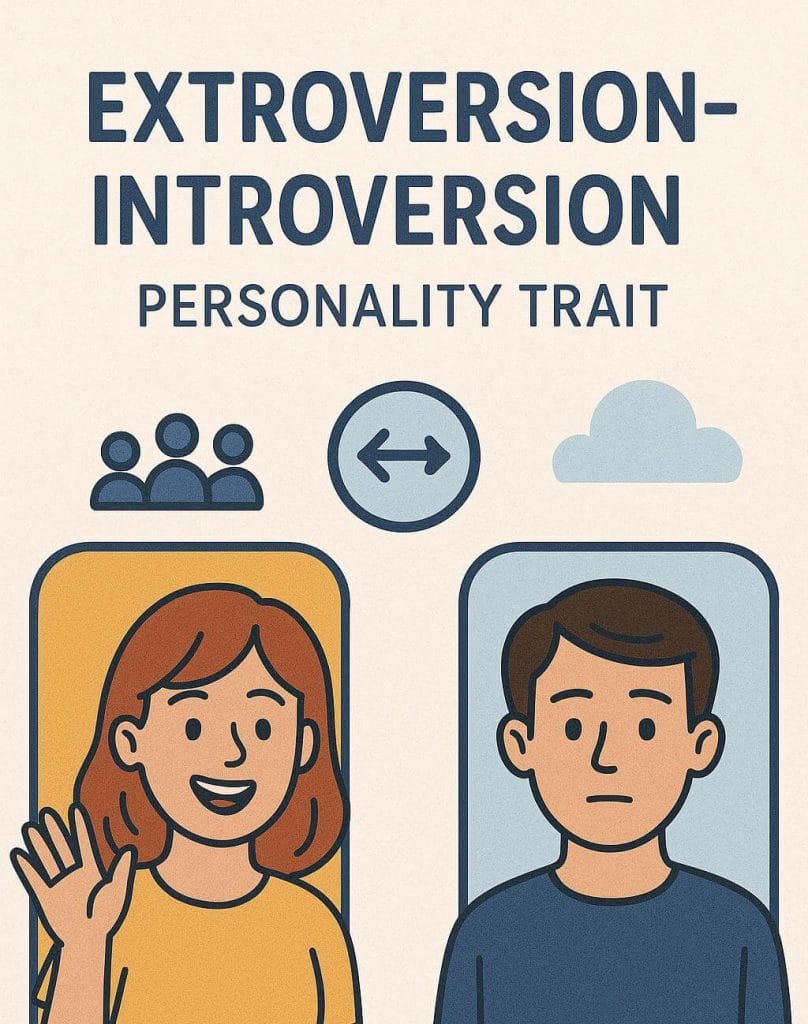
Extroversion-Introversion Personality Trait: Beyond Stereotypes

Key Takeaways
Extroversion-Introversion Defined: Extroversion-introversion represents a personality spectrum measuring how people gain energy and process information, with Extroverts drawing energy from external stimulation and introverts from internal reflection and solitude.
Spectrum, Not Binary: The majority of people fall somewhere in the middle of the Extroversion-introversion spectrum as ambiverts, challenging the myth that personality is an either-or categorization.
Personality Plasticity: Research proves you can successfully develop “counter-dispositional” behaviors outside your natural type when they serve meaningful goals, allowing introverts to excel in leadership and extroverts to master deep analytical work.
Introduction
Picture this: You’re at a workplace meeting where Sarah, labeled the “quiet one,” consistently delivers the most innovative solutions, while Mark, the supposed “people person,” struggles when asked to lead a complex project requiring deep analysis. If you’ve witnessed scenarios like this, you’re observing something that challenges one of our most persistent psychological myths—that people neatly fit into either “introvert” or “extrovert” boxes.
The reality is far more nuanced and fascinating than popular culture suggests. Recent neuroscientific research reveals that approximately 90% of people actually fall somewhere in the middle of the extroversion-introversion spectrum (Asendorpf, 2024), challenging the binary thinking that has dominated our understanding of personality for decades. Even more surprising, studies conducted during the COVID-19 pandemic found that extroverts experienced higher rates of depression during social restrictions—completely reversing typical pre-pandemic patterns (Lassi et al., 2025).
These findings represent just the tip of the iceberg in our evolving understanding of personality. Advanced brain imaging studies now show distinct neurological differences between introverts and extroverts, from how they process dopamine and acetylcholine to which brain regions show increased blood flow during different activities (Johnson et al., 2011; Depue & Collins, 1999). Meanwhile, groundbreaking research on “counter-dispositional behavior” demonstrates that people can successfully act against their natural tendencies without negative consequences—and may even benefit from doing so (Zelenski et al., 2013).
Perhaps most importantly, the emergence of ambiversion research has revealed that the majority of successful leaders, top sales performers, and innovative thinkers don’t fit traditional personality categories at all (Grant, 2013; Moore, 2012). These “ambiverts” demonstrate that personality flexibility, rather than type purity, may be the key to thriving in our complex, rapidly changing world.
Yet despite mounting scientific evidence, workplace cultures, educational systems, and even relationships continue to operate on outdated assumptions. Introverts are still frequently overlooked for leadership roles despite research showing they can be equally or more effective than their extroverted counterparts (Cain, 2012). Extroverts face pressure to maintain constant high energy, often leading to burnout when they need genuine downtime. And ambiverts—who represent the largest portion of the population—find themselves misunderstood by both ends of the spectrum.
This comprehensive guide cuts through decades of misconceptions to reveal what modern science actually tells us about extroversion and introversion. You’ll discover the neurological foundations that drive personality differences, learn evidence-based strategies for managing your energy regardless of your type, and understand how to leverage your natural strengths while developing areas for growth. We’ll explore the six distinct facets of extroversion within the Big Five Personality Framework, debunk persistent myths with hard data, and provide practical tools for improving communication, workplace performance, and personal relationships.
Whether you’re seeking to understand yourself better, manage a diverse team, or simply navigate social and professional situations more effectively, this guide offers scientifically-grounded insights that go far beyond simplistic personality labels. The goal isn’t to put you in a category—it’s to help you understand the full spectrum of human personality and how to work with, rather than against, your natural tendencies and those of others.
By the end of this exploration, you’ll have a sophisticated understanding of personality that transcends stereotypes and empowers you to make informed decisions about your career, relationships, and personal development. The science of personality is more fascinating and actionable than ever before—and it’s time to move beyond the myths to embrace the complexity of who we really are.
The Science Behind Extroversion and Introversion
What Science Really Tells Us About Extroversion and Introversion
The foundations of extroversion and introversion run much deeper than social preferences—they’re rooted in fundamental differences in brain structure, neurotransmitter processing, and nervous system functioning. Modern neuroscience has revolutionized our understanding of these personality dimensions, revealing biological mechanisms that explain why people genuinely differ in their responses to stimulation, social interaction, and environmental demands.
Neurological Foundations
Brain imaging studies using positron emission tomography (PET) scans have revealed striking differences between introverts and extroverts at the neurological level. Research consistently shows that introverts have increased blood flow in the frontal lobes of their brains—areas responsible for internal processing, planning, problem-solving, and self-reflection (Johnson et al., 1999). These regions include the right front insular (associated with empathy and emotional meaning), Broca’s area (which plans speech and activates self-talk), and the left hippocampus (which processes personal memories and experiences).
In contrast, extroverts show higher blood flow in the anterior cingulate gyrus, temporal lobes, and posterior thalamus—brain regions involved in sensory and emotional experience (Johnson et al., 1999). This neurological difference helps explain why introverts naturally gravitate toward introspective activities and careful analysis, while extraverts are drawn to external stimulation and immediate sensory experiences.
Perhaps even more fascinating are the differences in gray matter distribution. Studies using advanced brain imaging techniques have found that introverts possess larger, thicker gray matter in their prefrontal cortex—the area associated with abstract thought and decision-making (Riccelli et al., 2017). This finding provides a neurological basis for introverts’ tendency toward deep thinking and careful consideration of complex problems.
The neurotransmitter systems underlying these personality differences are equally compelling. Extroverts have been found to have more dopamine receptors in their brains and are less sensitive to dopamine overall, requiring more stimulation to achieve the same pleasurable effects (Depue & Collins, 1999). This explains why extroverts seek out social interaction, novel experiences, and high-stimulation environments—they literally need more to feel good.
Introverts, conversely, are more sensitive to dopamine and can become overstimulated when exposed to too much. Instead, they benefit more from the acetylcholine neurotransmitter system, which creates feelings of relaxed alertness and contentment (Laney, 2002). The acetylcholine pathway is longer and more complex than the dopamine pathway, which may explain why introverts often respond more slowly to stimulation but process information more thoroughly.
Nervous System Preferences
These neurochemical differences extend to fundamental nervous system functioning. Research suggests that introverts generally prefer parasympathetic nervous system activation—the “rest and digest” state that promotes calm, focused thinking and internal processing (Laney, 2002). When the parasympathetic system is engaged, muscles relax, energy is conserved, and blood flow increases to the frontal regions of the brain.
Extroverts, meanwhile, are more comfortable with sympathetic nervous system activation—the “fight or flight” state that increases alertness, physical energy, and readiness for action. During sympathetic activation, adrenaline is released, glucose energizes muscles, and oxygen increases throughout the body, while areas controlling careful, measured thinking may be temporarily dampened (Eysenck, 1967).
The Big Five Framework
Within the scientifically validated Big Five personality model (also known as OCEAN), extroversion represents one of five major personality dimensions, alongside Openness, Conscientiousness, Agreeableness, and Neuroticism. This framework, developed through decades of cross-cultural research, treats extroversion not as a binary category but as a continuous spectrum with multiple distinct facets (Costa & McCrae, 1992).
The NEO Personality Inventory identifies six specific facets of extroversion: Warmth (interpersonal intimacy and friendliness), Gregariousness (preference for large groups versus solitude), Assertiveness (dominance and leadership tendencies), Activity (energy level and pace of life), Excitement-seeking (preference for stimulation and adventure), and Positive Emotions (tendency toward joy and enthusiasm) (Costa & McCrae, 1992).
This multifaceted approach reveals why traditional introvert-extrovert labels often fail. Someone might score high on warmth and positive emotions while being low on gregariousness and excitement-seeking—creating a personality profile that doesn’t fit neatly into simple categories. Understanding these distinct facets helps explain seemingly contradictory behaviors, such as introverts who are warm and personable in small groups but uncomfortable in large gatherings.
Twin studies examining the heritability of extroversion have consistently found that approximately 53% of the variation in this trait can be attributed to genetic factors, with the remaining 47% influenced by environmental factors and personal experiences (Jang et al., 1996). This substantial genetic component underscores that personality differences aren’t simply learned behaviors but reflect deep-seated neurobiological variations.
Recent Research Developments (2024-2025)
The most recent research has added surprising nuances to our understanding of extroversion and introversion. A landmark 2025 study examining personality changes during the COVID-19 pandemic found that the typical relationship between extroversion and well-being was actually reversed during lockdown periods (Lassi et al., 2025). While extroverts normally report higher levels of happiness and life satisfaction, they experienced more depression and anxiety during social restrictions compared to introverts, who showed greater resilience to isolation.
This finding highlights the contextual nature of personality advantages and challenges the assumption that extroversion is universally beneficial. It also demonstrates how environmental factors can dramatically alter the expression and consequences of personality traits.
Emerging research on “counter-dispositional behavior” has revealed that people can successfully act against their natural personality tendencies without experiencing the fatigue or authenticity concerns that were previously assumed (Zelenski et al., 2013). Studies show that when introverts are instructed to act in extroverted ways, they often report increased positive emotions and well-being, suggesting greater personality flexibility than traditional theories proposed.
Gene-environment interaction studies have also provided new insights into how personality traits develop and express themselves across different contexts. Research examining dopamine-related genes across various climates found that the relationship between genetic predispositions and personality expression varies significantly based on environmental demands and cultural contexts (Penke et al., 2018).
These advances paint a picture of personality as more dynamic and contextually influenced than previously understood. Rather than fixed categories, extroversion and introversion represent stable tendencies that can be modified, adapted, and expressed differently depending on circumstances, goals, and developmental factors. This understanding opens new possibilities for personal growth and adaptation while respecting the fundamental neurobiological differences that shape our natural inclinations.
Find out more about Personality Theories in Psychology.
Debunking Common Myths and Misconceptions
7 Dangerous Myths About Introverts and Extroverts (Debunked by Science)
Despite decades of scientific research, misconceptions about extroversion and introversion persist in popular culture, workplace environments, and even educational settings. These myths not only misrepresent the complexity of human personality but can also lead to discrimination, missed opportunities, and self-limiting beliefs. Let’s examine the most pervasive myths and what research actually reveals.
Myth 1: Introversion Equals Shyness
Perhaps the most damaging misconception is the conflation of introversion with shyness. Research consistently demonstrates that these are entirely separate psychological constructs with no meaningful correlation (Aron et al., 2005). Shyness is about fear of social judgment and anxiety in social situations, while introversion is about energy preferences and information processing styles.
Studies examining the neural basis of these differences show distinct patterns. Shyness activates brain regions associated with fear and anxiety, particularly the amygdala, while introversion shows increased activation in areas associated with internal processing and reflection (Schwartz et al., 2003). Many introverts are socially confident and skilled—they simply prefer smaller groups and need quiet time to recharge. Conversely, many shy people are actually extroverts who feel energized by social interaction once their initial anxiety subsides.
This distinction has profound implications for how we understand and support different personality types. Shy individuals may benefit from anxiety-reduction techniques and gradual exposure to social situations, while introverts need recognition that their preference for solitude is not a problem to be fixed but a natural requirement for optimal functioning.
Myth 2: Extroverts Are Always Talkative
The stereotype of the extroverted “chatterbox” overlooks the multifaceted nature of extroversion. Research on the six facets of extroversion reveals that being extroverted doesn’t necessarily correlate with talkativeness (Costa & McCrae, 1992). Someone might score high on extraversion through assertiveness and activity level while being relatively reserved in conversation.
Modern workplace research identifies distinct forms of extroversion: networking-focused (making contacts), socially bold (comfortable with presentations), convincing (skilled at negotiation), and action-focused (thriving in busy environments) (TestGroup, 2023). An individual might excel in high-energy, fast-paced work environments while preferring to listen rather than dominate conversations.
This myth becomes particularly problematic in cultures that value verbal participation as evidence of engagement or intelligence. Many effective extroverted leaders are actually skilled listeners who draw energy from others without necessarily being the most talkative person in the room.
Myth 3: Personality Type Determines Confidence
One of the most persistent myths suggests that extroverts are inherently more confident than introverts. Cross-cultural research demonstrates that confidence is not an innate state tied to extroversion but rather a skill developed through experience, success, and supportive environments (Lucas et al., 2000). Confidence levels vary widely within both introverted and extraverted populations.
Studies examining leadership emergence show that while extroverts may appear confident more quickly in new situations, introverts often demonstrate deeper, more sustainable confidence based on competence and preparation (Grant et al., 2011). The key difference lies in how confidence is expressed and developed, not in its presence or absence.
Cultural factors significantly influence this relationship. In individualistic societies, extroverted behaviors are often interpreted as confidence, while in collectivistic cultures, the thoughtful, reserved approach typical of introverts may be seen as more confident and respectful (Hofstede, 2001).
Myth 4: It’s a Binary Choice
Perhaps the most scientifically inaccurate myth is that people must be either introverted or extroverted. Personality researchers emphasize that extroversion-introversion exists on a continuous spectrum, with most people falling somewhere in the middle (McCrae & Costa, 1989). Advanced statistical analyses of personality data consistently reveal a normal distribution rather than distinct categories.
Research by personality scientists like Jens Asendorpf suggests that approximately 90% of people are “somewhere in the middle” of the extroversion-introversion spectrum (Asendorpf, 2024). These individuals, often called ambiverts, display characteristics of both types depending on the situation, their energy levels, and their goals.
Even those who lean strongly toward one end of the spectrum show significant variation in their behavior across different contexts. The emerging research on “whole trait theory” demonstrates that personality expression depends heavily on situational factors, personal values, and momentary states (Fleeson, 2017).
Myth 5: Introverts Don’t Like People
This harmful stereotype misrepresents introverts’ social preferences and capabilities. Research shows that introverts often have fewer but deeper relationships compared to extroverts, who tend to maintain larger but less intimate social networks (Srivastava et al., 2008). Quality versus quantity preferences don’t indicate antisocial tendencies.
Studies of social engagement among introverted students reveal that when provided with appropriate support and environments, introverts can be highly socially engaged and demonstrate excellent group working skills (Tuovinen et al., 2020). They often excel at listening, considering others’ perspectives, and facilitating collaborative problem-solving.
The key distinction lies in energy management rather than social preference. Introverts genuinely enjoy social interaction but need recovery time afterward, while extroverts gain energy from social engagement. This difference in energy dynamics, not in social motivation, explains varying social patterns.
Myth 6: Extroverts Are Better Leaders
Leadership research has thoroughly debunked the assumption that extroversion automatically translates to better leadership. While extraverts may emerge as leaders more quickly in new groups, effectiveness depends heavily on situational factors and team composition (Judge et al., 2002).
A groundbreaking study by Adam Grant found that introverted leaders actually outperformed extroverted leaders when managing proactive teams, because they were more likely to listen to and implement team members’ suggestions (Grant et al., 2011). Extroverted leaders performed better with passive teams that needed more direction and motivation.
Meta-analyses of leadership effectiveness show that the most successful leaders possess a balanced approach, drawing on both introverted and extroverted qualities as situations demand (Hoffman et al., 2011). Many highly effective leaders, including Warren Buffett, Bill Gates, and Barack Obama, identify as introverts or ambiverts.
Myth 7: You Can’t Change Your Type
Traditional personality theories suggested that extroversion-introversion was fixed and unchangeable. However, recent research on personality development and “counter-dispositional behavior” challenges this assumption. Studies show that people can successfully act against their natural tendencies and may even experience benefits from doing so (Zelenski et al., 2013).
Research on “free trait theory” demonstrates that individuals can adopt behaviors that don’t match their natural disposition when pursuing personally meaningful goals (Little, 2014). For example, an introvert might successfully take on an extroverted role in sales or public speaking when the work aligns with their values and provides adequate recovery opportunities.
Longitudinal studies also reveal that personality traits, while relatively stable, do change over time in response to life experiences, conscious effort, and environmental demands (Roberts & Mroczek, 2008). People tend to become less extroverted and more emotionally stable as they age, suggesting that personality development continues throughout life.
The emerging field of personality intervention research explores how targeted activities and practices can help people develop skills and behaviors outside their natural comfort zones while maintaining authenticity and well-being (Hudson & Fraley, 2015). This research suggests that personality can be viewed as a starting point rather than a destination.
These myth-busting findings have profound implications for how we approach personal development, team building, education, and workplace design. By moving beyond simplistic stereotypes, we can create environments and expectations that honor the full complexity of human personality while supporting everyone’s potential for growth and contribution.
Ambiversion – The Forgotten Middle Ground
Why Most People Aren’t Pure Introverts or Extroverts
In the rush to categorize people as either introverts or extroverts, we’ve overlooked the most common personality type of all: the ambivert. These individuals, who display relatively balanced levels of both introverted and extroverted characteristics, represent the majority of the population yet remain largely absent from popular personality discussions and workplace training programs.
Defining Ambiversion
Ambiversion was first described by psychologist Edmund Smith Conklin in 1923, then largely forgotten until it was revived in Hans Eysenck’s personality models decades later (Davidson, 2017). An ambivert is someone who falls in the middle range of the extroversion-introversion spectrum, displaying characteristics of both types depending on the situation, their energy levels, and their goals.
Unlike the extremes of the spectrum, ambiverts don’t have a consistent preference for either high or low stimulation environments. Instead, they demonstrate remarkable flexibility, adapting their behavior to match situational demands while maintaining authentic self-expression (Grant, 2013). Research suggests that between 50-70% of the population exhibits ambivert characteristics, making it the most common personality pattern (Goldberg, 1992).
The American Psychological Association defines ambiverts as individuals who present with equal parts introversion and extroversion, though this balance doesn’t mean they’re indecisive or inconsistent (APA, 2023). Rather, they possess a broader range of comfortable behaviors and can access both the deep-thinking strengths of introversion and the social energy of extroversion as needed.
The Ambivert Advantage
Research across multiple domains reveals significant advantages to ambivert personality patterns. In perhaps the most famous study of ambiversion, organizational psychologist Adam Grant analyzed the sales performance of over 340 employees and found that ambiverts significantly outperformed both introverts and extroverts (Grant, 2013). The ambiverts in the study generated 24% more revenue than extroverts and 32% more than introverts.
This advantage stems from ambiverts’ ability to adapt their approach to different customers and situations. With introverted customers, they can listen carefully and build trust through thoughtful questions. With extroverted customers, they can match their energy and enthusiasm. They know when to push and when to pull back, creating more effective and authentic sales relationships.
Academic research has revealed similar patterns. A 2016 study of biology students found that both ambiverted and introverted students generally performed better academically than extroverts (Wehrli, 2016). The researchers suggested that ambiverts could draw on the concentrated focus typical of introverts while also engaging socially with classmates for collaborative learning—essentially accessing the best of both approaches.
Leadership research has identified particular advantages for ambivert leaders. Karl Moore’s interviews with over 350 C-suite executives revealed that while 40% identified as extroverts and 40% as introverts, the remaining 20% who identified as ambiverts often demonstrated superior decision-making abilities (Moore, 2012). They combined the bold vision often associated with extroversion with the careful analysis typical of introversion.
Identifying Ambivert Traits
Ambiverts display several distinctive patterns that set them apart from consistent introverts or extroverts. They show high contextual variability in their social behavior—being outgoing at work parties but preferring quiet dinners with friends, or leading meetings confidently while avoiding large networking events (Science of People, 2024).
Their energy management follows a different pattern than either extreme. While introverts consistently need solitude to recharge and extroverts consistently seek social stimulation, ambiverts need both. They might feel energized by a stimulating social event one day and crave solitude the next, depending on their recent activities and current stress levels.
Ambiverts often maintain distinctly different social circles that rarely intersect. Their high-energy, party-loving friends might never meet their thoughtful book club companions. This social segmentation isn’t compartmentalization in a problematic sense—it’s a natural way of meeting different psychological needs in appropriate contexts (Kaufman, 2024).
Decision-making patterns also reveal ambivert tendencies. When faced with choices between social and solitary activities, ambiverts genuinely feel neutral rather than having a clear preference. They might equally enjoy a night out with friends or a quiet evening at home, depending on their current state and recent experiences.
Research Limitations and Oversight
Despite representing the majority of the population, ambiversion has received remarkably little scientific attention. As personality researcher Scott Barry Kaufman notes, “By definition, ambiversion is not linked to particularly distinctive or memorable profiles” (Kaufman, 2024). This “normalness” has made ambiverts less interesting to researchers who often focus on extreme cases for clearer statistical relationships.
The lack of research attention creates a self-perpetuating cycle. Personality assessments, workplace training programs, and self-help resources continue to focus on the introvert-extrovert binary because that’s where the research literature is most developed. This leaves ambiverts without adequate tools and frameworks for understanding their own personality patterns.
Jens Asendorpf, a personality researcher at Humboldt University, argues that this oversight represents a significant gap in personality science: “It is good scientific practice to look at the entire range of values. But many people prefer to look for simple answers to the question of why people feel, think and act the way they do” (Asendorpf, 2024).
Challenges of Being an Ambivert
While ambiversion offers significant advantages, it also presents unique challenges. The flexibility that makes ambiverts effective can also make them harder to understand, both for themselves and others. They might be perceived as inconsistent or wishy-washy by people who expect stable behavioral patterns.
Career planning can be particularly challenging for ambiverts. While introverts might naturally gravitate toward analytical or independent work and extroverts toward people-focused roles, ambiverts can potentially succeed in a much broader range of positions. This flexibility, while ultimately advantageous, can make initial career decisions more complex.
Energy management requires more sophisticated strategies for ambiverts. They can’t rely on simple rules like “always need social time” or “always need alone time.” Instead, they must develop nuanced self-awareness about their current state and recent activities to make good choices about how to spend their energy.
Social relationships can also be complicated by ambivert patterns. Partners, friends, and colleagues might struggle to predict when an ambivert will want social engagement versus solitude. This unpredictability requires more communication and flexibility from both the ambivert and their relationships.
The lack of clear identity categories can create existential challenges for ambiverts, particularly in cultures that value clear self-definition. They might feel pressure to choose a label or worry that their flexibility indicates a lack of authentic self-knowledge.
Understanding ambiversion is crucial for creating more inclusive and effective environments in workplaces, schools, and communities. Rather than designing for the extremes of introversion and extroversion, we need approaches that recognize and support the flexible, contextual nature of most people’s personality expression. This means creating environments with both stimulating collaborative spaces and quiet reflection areas, offering multiple communication channels, and recognizing that most people need both social connection and solitary renewal at different times.
Science-Based Energy Management: Strategies for Every Personality Type
Understanding the Energy Economics of Personality
Energy management represents one of the most practical applications of personality science. Unlike motivation or mood, which can fluctuate dramatically, energy patterns related to extroversion and introversion are remarkably consistent and predictable. Understanding these patterns—and working with rather than against them—can dramatically improve performance, well-being, and life satisfaction.
Energy Management for Introverts
Research consistently describes introverts as operating like “rechargeable batteries”—they expend energy during social interactions and external stimulation, then need quiet, low-stimulation environments to restore their resources (Laney, 2002). This isn’t a weakness or limitation; it’s a fundamental aspect of how introverted nervous systems function optimally.
Neuroscientific research explains this pattern through the parasympathetic nervous system preference common among introverts. When introverts engage their preferred system, acetylcholine increases alertness while promoting calm focus, blood flow increases to frontal brain regions responsible for planning and reflection, and stress hormones decrease (Eysenck, 1967).
Effective energy management for introverts requires proactive planning rather than reactive recovery. Research shows that introverts who schedule regular “recharge time” throughout their day maintain higher performance levels and report greater well-being than those who try to push through until complete exhaustion (Psychology Today, 2018).
Specific strategies supported by research include: starting each day with 60-90 minutes of quiet, focused work before engaging in meetings or collaborative activities; scheduling brief “energy breaks” between high-stimulation activities, even if it’s just five minutes in a quiet space; creating transition rituals between work and home life to shift from external demands to internal restoration; and establishing non-negotiable blocks of solitude for activities like reading, walking in nature, or engaging in hobbies.
The concept of “energy budgeting” proves particularly useful for introverts. Just as financial budgets help manage monetary resources, energy budgets help introverts allocate their social and stimulation capacity strategically. Research shows that introverts who plan for high-energy activities by preserving energy beforehand and scheduling recovery time afterward perform better and experience less stress than those who approach each day reactively (Ancowitz, 2010).
Warning signs of energy depletion in introverts include difficulty making decisions, increased irritability, physical fatigue despite adequate sleep, and a strong desire to avoid all social contact. Research identifies this pattern as “introvert burnout” or “social hangover,” which can take days to recover from without proper energy management (Granneman, 2018).
Energy Optimization for Extroverts
Extroverts operate on fundamentally different energy dynamics. Rather than depleting energy through social interaction, they generate energy through external stimulation, social engagement, and environmental variety. Understanding and optimizing these patterns is crucial for extrovert well-being and performance.
The sympathetic nervous system activation preferred by many extroverts creates a positive feedback loop with social engagement. Dopamine release during social interaction motivates seeking more stimulation, while adrenaline and increased heart rate create feelings of excitement and engagement (Depue & Collins, 1999). This explains why extraverts often report feeling “flat” or restless during periods of isolation.
However, recent research has revealed important nuances in extrovert energy management. The rise of remote work has highlighted that many extroverts struggle with purely virtual interactions, which don’t provide the same energizing effects as in-person engagement (Herrmann International, 2021). This suggests that the quality and type of stimulation matters, not just the quantity.
Effective energy management for extroverts involves ensuring adequate stimulation while avoiding overstimulation. Research shows that extroverts benefit from: starting the day with energizing activities like exercise, music, or brief social interactions; scheduling collaborative work during peak energy periods; using “stimulation breaks” during solitary work—such as calling a colleague or working in a busy environment; and creating structured opportunities for processing thoughts out loud, either through conversation or voice recording.
The challenge for many extroverts is recognizing when they need restoration. Unlike introverts, who clearly feel depleted after too much stimulation, extroverts might not realize they’re running on empty until they experience physical exhaustion, irritability, or difficulty focusing. Research suggests that extroverts benefit from scheduled “downtime” even when they don’t feel like they need it (Lucas et al., 2008).
Ambivert Energy Balance
Ambiverts face the most complex energy management challenges because their needs vary based on recent activities, current stress levels, and situational demands. Research shows that successful ambiverts develop sophisticated self-monitoring skills to assess their current energy state and choose appropriate activities (Grant, 2013).
Unlike introverts or extroverts, who can rely on relatively consistent patterns, ambiverts need contextual awareness. They might feel energized by social interaction after a period of solitary work but depleted by the same interaction if they’ve already had several social engagements that week.
Effective ambivert energy management strategies include: daily “energy check-ins” to assess current state and needs; maintaining flexibility in schedules to accommodate varying energy patterns; developing both social and solitary restoration activities; and communicating energy needs clearly to family and colleagues to avoid misunderstandings.
Research suggests that ambiverts who successfully manage their energy often create “balanced days” that include both stimulating and calming activities, rather than trying to categorize entire days as “social” or “solitary” (Kaufman, 2024).
Creating Energy-Aware Environments
The implications of energy management research extend beyond individual strategies to environmental design. Workplaces that understand personality-based energy patterns can significantly improve employee satisfaction, performance, and retention.
Research-based environmental considerations include: providing both open collaborative spaces and quiet individual work areas; offering flexible scheduling options that allow people to work during their peak energy periods; creating “transition zones” where people can adjust between high and low stimulation activities; and implementing meeting practices that accommodate different processing styles and energy needs.
Google’s research on effective teams found that psychological safety—including the ability to be authentic about energy needs—was the strongest predictor of team performance (Duhigg, 2016). This suggests that creating energy-aware environments isn’t just about physical space but about cultural norms that support different personality patterns.
The most innovative organizations are beginning to recognize energy management as a core productivity strategy. Rather than expecting all employees to maintain the same energy patterns, they’re designing workflows and environments that leverage natural personality differences for optimal performance.
Mastering Communication Across the Extroversion-Introversion Spectrum
Understanding Processing Differences
Effective communication across personality types requires understanding that introverts and extroverts literally process information differently. These differences aren’t preferences or quirks—they’re neurologically-based patterns that affect how people receive, process, and respond to information in real-time.
Research using brain imaging technology shows that introverts process information through longer, more complex neural pathways that involve more frontal lobe activity (Johnson et al., 1999). This creates their characteristic pattern of thinking carefully before speaking and preferring time to formulate thoughtful responses. The acetylcholine-dominant pathway favored by introverts promotes deep reflection but operates more slowly than the dopamine-driven pathways preferred by extroverts.
Extroverts, conversely, show increased activity in brain regions associated with rapid processing and immediate response. Their shorter neural pathways and dopamine-driven reward systems create natural tendencies toward quick thinking, immediate verbal processing, and learning through external interaction (Depue & Collins, 1999).
These neurological differences explain why communication breakdowns often occur not due to lack of intelligence or interest, but due to mismatched processing speeds and styles. Understanding these patterns allows for more effective communication strategies that work with, rather than against, natural neurological tendencies.
Introvert Communication Strategies
Research-based communication strategies for introverts focus on leveraging their natural strengths while developing skills for more extroverted communication requirements. Studies show that introverts who prepare for communication situations report higher confidence and better outcomes than those who attempt to “wing it” (Ancowitz, 2010).
Preparation techniques that align with introvert processing patterns include: reviewing meeting agendas in advance and formulating key points; preparing thoughtful questions that demonstrate engagement; developing “bridge phrases” to buy thinking time during conversations (“That’s an interesting perspective, let me think about that”); and practicing important presentations or conversations beforehand to reduce cognitive load during the actual interaction.
Written communication often plays to introvert strengths. Research shows that many introverts excel in email, text-based collaboration tools, and detailed written proposals because these formats allow for careful thought and editing (Kahnweiler, 2013). Organizations that balance verbal and written communication provide more opportunities for introvert contribution.
Networking approaches for introverts should focus on quality over quantity. Research demonstrates that introverts often build stronger professional relationships through one-on-one conversations, smaller group interactions, and follow-up communications that allow for deeper connection (Cain, 2012). Rather than working the room at large events, effective introvert networkers often prepare targeted conversations with specific individuals.
Assertiveness strategies for introverts must account for their energy expenditure patterns. Research shows that introverts can be highly assertive when they’ve had adequate preparation time and when the topic aligns with their values or expertise (Little, 2014). However, they benefit from choosing their battles strategically and ensuring adequate recovery time after high-energy assertive interactions.
Extrovert Communication Optimization
While extroverts often appear naturally skilled at communication, research reveals specific areas where they can significantly improve effectiveness. Studies show that extraverts’ rapid processing and enthusiasm for immediate response can sometimes work against them in complex or sensitive communication situations (Judge et al., 2002).
Active listening development represents a crucial area for many extroverts. Their natural tendency to process thoughts verbally and respond quickly can interfere with truly hearing and understanding others’ perspectives. Research-based techniques include: practicing the “pause and reflect” method—waiting three seconds before responding; summarizing what others have said before adding new information; asking clarifying questions rather than immediately offering solutions; and scheduling specific “listening time” during conversations.
Managing interruption tendencies requires conscious effort from many extroverts. Research shows that while extroverts often interrupt out of enthusiasm rather than disrespect, it can significantly impact communication effectiveness, particularly with introvert colleagues (Grant et al., 2011). Effective strategies include: using note-taking to capture thoughts without interrupting; establishing turn-taking protocols in meetings; and developing awareness of when others need more processing time.
Email versus face-to-face balance presents ongoing challenges for many extroverts in modern workplaces. While extroverts naturally prefer verbal communication, research shows that over-relying on this preference can exclude introvert perspectives and reduce decision-making quality (Kahnweiler, 2013). Effective extrovert communicators learn to use written communication strategically for complex topics, decision documentation, and inclusive participation.
Cross-Type Communication
The most effective teams and relationships develop communication norms that leverage the strengths of different personality types rather than defaulting to one style. Research on high-performing teams reveals several key practices for cross-type communication effectiveness.
Meeting structure optimization can dramatically improve cross-type participation. Studies show that meetings benefit from: distributing agendas 24-48 hours in advance; including both discussion and reflection time; using multiple participation formats (verbal, written, small group); and establishing clear protocols for turn-taking and idea development (Ancowitz, 2010).
Processing speed accommodation requires understanding and respecting different thinking styles. Research demonstrates that teams perform better when they: allow adequate thinking time for complex decisions; use “think-pair-share” formats that give introverts processing time; provide multiple ways to contribute ideas; and avoid pressuring immediate responses to complex questions.
Conflict resolution approaches must account for personality differences in confrontation preferences. Studies show that introverts often prefer addressing conflicts through written communication or structured one-on-one conversations, while extroverts may prefer immediate verbal discussion (Thomas-Kilmann, 1974). Effective cross-type conflict resolution offers multiple pathways and respects different comfort levels with direct confrontation.
Building inclusive environments requires intentional design for different communication styles. Research-based inclusive practices include: rotating meeting facilitation styles; providing both synchronous and asynchronous communication options; ensuring physical spaces support both collaboration and focused work; and training all team members on personality differences and communication adaptation.
Digital Age Considerations
Modern technology has created new communication challenges and opportunities across personality types. Research on video meeting fatigue shows that while introverts often experience more exhaustion from video calls than in-person meetings, extroverts may struggle with the reduced energy and non-verbal communication available through digital platforms (Microsoft, 2021).
Social media engagement patterns reveal interesting personality differences. Studies show that introverts often prefer platforms that allow for thoughtful, long-form communication and smaller group interactions, while extroverts gravitate toward platforms with immediate interaction and broader audience reach (Ryan & Xenos, 2011). Understanding these preferences helps both personal and professional digital communication strategies.
Online versus offline relationship building requires different strategies for different personality types. Research demonstrates that introverts often excel at building meaningful professional relationships through online platforms that allow for thoughtful exchange, while extroverts may need more intentional strategies for creating personal connection through digital mediums (Amichai-Hamburger & Vinitzky, 2010).
The key insight from communication research is that effectiveness comes not from everyone adopting the same style, but from understanding and adapting to different processing patterns while maintaining authenticity. The most successful individuals and teams develop communication flexibility while respecting the neurological and energetic realities of different personality types.
Leveraging Your Personality Type for Career Success
The Workplace Performance Revolution
The relationship between personality type and career success is far more nuanced than popular culture suggests. While certain stereotypes persist—extroverts as natural leaders, introverts as behind-the-scenes workers—cutting-edge research reveals that success across all career paths depends more on leveraging natural strengths while developing complementary skills than on fitting into predetermined personality boxes.
Introvert Strengths in the Workplace
Recent workplace research has identified numerous areas where introverted employees consistently outperform their extroverted counterparts. These advantages stem from the neurological differences that create introverts’ preference for deep processing , careful analysis, and thoughtful decision-making.
Studies examining innovation and creativity in workplace settings consistently show that introverts excel at generating original ideas and developing comprehensive solutions to complex problems (Gino & Ariely, 2012). Their preference for internal processing and reflection creates ideal conditions for the deep thinking required for breakthrough innovations. Research at companies like Google and 3M has found that many of their most valuable patents and product innovations originated from introverted team members who were given adequate time and space for independent development.
The quality of relationship building represents another significant introvert advantage. While extroverts often build broader networks, research shows that introverts typically develop deeper, more meaningful professional relationships that provide greater long-term career value (Srivastava et al., 2008). These stronger relationships often translate into better mentorship opportunities, more detailed feedback, and stronger advocacy for career advancement.
Independent work capabilities give introverts significant advantages in increasingly autonomous work environments. Studies of remote work effectiveness show that introverts often maintain higher productivity levels and job satisfaction when working independently compared to extroverts, who may struggle with reduced social interaction (Barrick & Mount, 1991). This advantage has become particularly valuable as organizations embrace flexible and remote work arrangements.
Risk assessment and decision-making quality represent additional introvert strengths. Research examining decision-making processes shows that introverts’ tendency toward careful analysis and consideration of multiple perspectives often leads to better long-term outcomes, particularly for complex or high-stakes decisions (Grant et al., 2011). Their natural inclination to think before acting can prevent costly mistakes and identify potential problems before they become critical.
Extrovert Advantages at Work
Extroverts bring complementary strengths that prove valuable across many workplace contexts. Their natural energy for social interaction, rapid processing, and external engagement creates advantages in several key areas.
Leadership emergence represents the most documented extrovert advantage. Meta-analyses consistently show that extroverts are more likely to be perceived as leaders and to emerge in leadership roles, particularly in group settings without formal hierarchy (Judge et al., 2002). Their comfort with visibility, quick decision-making, and natural enthusiasm for group interaction create leadership presence that others often find compelling.
Team building and motivation capabilities represent core extrovert strengths. Research shows that extroverted team leaders excel at energizing group dynamics, facilitating collaboration, and maintaining team morale during challenging periods (Costa & McCrae, 1992). Their ability to generate excitement and communicate vision effectively helps teams navigate uncertainty and maintain momentum.
External relationship management provides extroverts with significant career advantages. Studies of sales performance, client relationship management, and partnership development consistently show that extroverts excel at building broad professional networks and maintaining multiple simultaneous relationships (Barrick & Mount, 1991). This capability proves valuable for roles requiring extensive external interaction and relationship development.
Quick decision-making under pressure represents another extrovert strength. Research examining crisis management and time-sensitive decision-making shows that extroverts often excel in situations requiring rapid response and immediate action (Eysenck, 1967). Their comfort with uncertainty and willingness to make decisions with incomplete information can be crucial in fast-moving business environments.
Career Path Considerations
Understanding personality-job fit has become increasingly sophisticated as researchers identify specific aspects of roles that align with different personality patterns. Rather than broad categorizations, modern career research focuses on environmental factors and task characteristics that support optimal performance.
Job characteristics research reveals that introverts thrive in roles with: opportunities for independent work and deep focus; complex problem-solving requirements; emphasis on quality over quantity of output; and minimal interruption and multitasking demands (Barrick & Mount, 1991). These characteristics can be found across various industries and levels, from research and development to strategic planning to specialized technical roles.
Extroverts excel in positions characterized by: high levels of interpersonal interaction; dynamic, changing environments; opportunities for public speaking and presentation; and collaborative, team-based work structures (Judge et al., 2002). Again, these characteristics span industries and can be found in everything from sales and marketing to operations management to training and development.
Performance prediction research shows that personality-job fit predicts not only initial performance but also long-term career satisfaction and advancement. Studies following employees over decades reveal that those who find roles aligned with their personality patterns report higher job satisfaction, lower turnover intentions, and more rapid career progression (Roberts & Robins, 2004).
Promotion Patterns by Type
Large-scale longitudinal research examining promotion patterns reveals surprising complexities in how personality affects career advancement. While extroverts may emerge as leaders more quickly in new organizations, long-term advancement patterns show more nuanced relationships.
Recent studies tracking promotions across multiple organizational levels found that conscientiousness and emotional stability were stronger predictors of advancement than extroversion at senior levels (Spark et al., 2022). This suggests that while extroversion may provide early career advantages, other personality factors become more important for sustained success.
Industry-specific research reveals significant variation in promotion patterns. In technical industries, introvert characteristics like deep thinking and attention to detail often predict advancement, while in relationship-intensive industries, extrovert traits may provide more consistent advantages (Barrick et al., 2001).
The role of gender and cultural factors significantly influences personality-promotion relationships. Research shows that extrovert behaviors may be more consistently rewarded in male-dominated or Western cultural contexts, while other cultural and organizational contexts may value introvert characteristics more highly (Costa et al., 2001).
Creating Inclusive Workplaces
The most progressive organizations are moving beyond personality stereotypes toward inclusive environments that leverage diverse personality strengths. Research on high-performing teams consistently shows that personality diversity, when properly managed, leads to better outcomes than homogeneous personality compositions.
Meeting structure optimization has emerged as a crucial area for inclusive workplace design. Studies show that effective meetings incorporate: advance agenda distribution for preparation time; multiple participation formats including verbal discussion and written input; small group breakouts to provide comfortable participation opportunities; and explicit time for reflection and processing (Ancowitz, 2010).
Physical space design increasingly recognizes different personality needs. Research-based workspace design includes: variety in space types from open collaboration areas to quiet individual work zones; access to natural light and nature views, which benefits all personality types; flexible seating arrangements that can be adapted for different meeting and work styles; and designated quiet zones for focused work and restoration (Kaplan, 1995).
Performance evaluation fairness requires understanding how personality differences affect both performance expression and evaluation perception. Studies show that traditional performance review processes may inadvertently favor extrovert behaviors like verbal self-promotion and visibility-seeking (Brutus et al., 2013). More inclusive evaluation approaches consider multiple performance indicators and diverse contribution styles.
Remote Work Implications
The massive shift toward remote and hybrid work has created new opportunities and challenges for different personality types. Research examining remote work effectiveness reveals complex patterns that challenge simple assumptions about personality preferences.
While initial predictions suggested that introverts would universally prefer remote work, studies show more nuanced patterns. Introverts do report higher satisfaction with reduced commuting and office distractions, but they also struggle with informal relationship building and spontaneous collaboration opportunities that support career advancement (Barrero et al., 2021).
Extroverts face their own remote work challenges and opportunities. While they may miss the energy of in-person interaction, research shows that successful extrovert remote workers develop strategies for maintaining social connection and collaborative energy through intentional virtual interaction and structured communication (Microsoft, 2021).
Technology adaptation patterns vary significantly by personality type. Studies show that introverts often prefer asynchronous communication tools that allow for thoughtful response, while extroverts gravitate toward synchronous tools that enable immediate interaction (Hamburger & Ben-Artzi, 2000).
The key insight from career success research is that thriving in modern workplaces requires developing a sophisticated understanding of your personality patterns while building skills across the full spectrum of workplace demands. Rather than limiting themselves to stereotypical roles, the most successful individuals learn to leverage their natural strengths while developing complementary capabilities that expand their career options and effectiveness.
Learn more about Personality Traits across different Relationship contexts.
Can You Change Your Personality? The Science of Trait Fluidity
Redefining Personality Plasticity
For decades, personality psychology operated under the assumption that traits were essentially fixed by early adulthood. This view, while providing useful stability for prediction and assessment, painted an overly rigid picture of human nature. Groundbreaking research over the past decade has revolutionized our understanding, revealing that personality traits show far more flexibility and developmental potential than previously imagined.
Counter-Dispositional Behavior Research
The most exciting developments in personality science involve research on “counter-dispositional behavior”—the ability to act against one’s natural personality tendencies. This research challenges fundamental assumptions about authenticity, effort, and the consequences of acting “out of character.”
Studies led by researchers like John Zelenski have demonstrated that when people are instructed to act in extroverted ways, regardless of their natural personality type, they typically experience increased positive emotions, greater social confidence, and higher levels of life satisfaction (Zelenski et al., 2013). Remarkably, these benefits occur without the fatigue or discomfort that personality theory had predicted.
Perhaps most surprising, introverts who engaged in counter-dispositional extroverted behavior reported feeling more authentic, not less, during these experiences. This finding directly contradicts traditional assumptions that acting against personality type necessarily involves putting on a false persona (Fleeson & Wilt, 2010).
The neurological mechanisms underlying counter-dispositional behavior are beginning to be understood. Brain imaging studies show that when people engage in behaviors outside their typical personality patterns, they activate additional prefrontal cortex regions associated with cognitive control and behavioral regulation (DeYoung, 2010). This suggests that acting counter-dispositionally requires mental effort but doesn’t create the kind of psychological strain that early theories predicted.
Free Trait Theory Applications
Brian Little’s “Free Trait Theory” provides a framework for understanding when and how people can successfully transcend their personality limitations. According to this theory, individuals can adopt “free traits”—behaviors that don’t match their natural disposition—when these behaviors serve personally meaningful goals or “personal projects” (Little, 2014).
Research supporting free trait theory shows that people can sustain counter-dispositional behavior for extended periods when the behavior aligns with their core values, supports important relationships, or advances meaningful personal or professional goals. For example, an introverted teacher might successfully adopt extroverted classroom behaviors because education represents a deeply held value, even though the same person might find purely social extroverted behavior draining.
The key insight from free trait research is that authenticity doesn’t require behavioral consistency. Instead, authenticity involves aligning behavior with personal values and goals, even when this requires acting against natural personality tendencies. This reframes personality development from a process of accepting limitations to one of strategic skill building.
Studies examining free trait implementation reveal several factors that support successful counter-dispositional behavior: clear connection between the behavior and personal values; adequate recovery time to restore energy depleted by unnatural behaviors; social support and understanding from important relationships; and gradual skill building rather than dramatic personality overhauls (Little, 2014).
Personality Development Across Lifespan
Longitudinal research tracking individuals over decades reveals consistent patterns of personality change throughout adult life. These changes occur through both natural maturation processes and intentional development efforts.
The most robust finding in personality development research is the “maturity principle”—the tendency for people to become more emotionally stable, conscientious, and agreeable as they age (Roberts & Mroczek, 2008). Interestingly, extroversion shows a more complex pattern, with social dominance and assertiveness often increasing through middle age while sociability and excitement-seeking tend to decrease.
These changes aren’t simply responses to changing life circumstances. Research shows that personality development continues even when life situations remain relatively stable, suggesting active developmental processes rather than passive adaptation (Roberts et al., 2006).
Cultural and environmental factors significantly influence personality development patterns. Studies comparing personality change across different societies reveal that individualistic cultures tend to promote continued extroversion development, while collectivistic cultures may support increased introversion and emotional stability over time (McCrae & Terracciano, 2005).
Environmental Influence Factors
Modern research has identified numerous environmental factors that can influence personality development. These findings have practical implications for individuals seeking to develop new personality capabilities and organizations aiming to support employee growth.
Work environment characteristics significantly impact personality development. Studies show that jobs requiring sustained interpersonal interaction tend to increase extroversion over time, while roles demanding detailed analysis and independent work support introversion development (Roberts et al., 2003). This suggests that career choices don’t just reflect personality—they actively shape it.
Social relationship patterns also influence personality development. Research demonstrates that people tend to become more similar to their close friends and romantic partners over time, suggesting that relationship choices provide opportunities for personality growth in desired directions (Lehnart et al., 2010).
Geographic and cultural environments play important roles in personality development. Studies comparing personality patterns across different regions and countries reveal that environmental factors like population density, cultural values, and economic conditions can influence the expression and development of personality traits (Rentfrow et al., 2008).
Intentional Personality Change
Perhaps the most exciting area of personality research involves studies of intentional personality change—efforts to deliberately develop new personality characteristics. This research moves beyond describing natural personality development to actively facilitating desired changes.
Intervention studies have demonstrated that targeted activities and practices can produce measurable personality changes within relatively short timeframes. For example, research on loving-kindness meditation shows increases in agreeableness and emotional stability after just eight weeks of practice (Klimecki et al., 2013).
Cognitive-behavioral interventions designed to address specific personality-related challenges have shown particular promise. Studies demonstrate that therapy approaches targeting negative thought patterns can produce lasting changes in neuroticism, while behavioral activation techniques can increase extroversion-related behaviors and experiences (Roberts et al., 2017).
Goal-setting and implementation intention strategies prove effective for developing counter-dispositional behaviors. Research shows that people who set specific, measurable goals for personality-related behavior change and create detailed implementation plans are more likely to achieve lasting change than those who rely on general motivation alone (Hudson & Fraley, 2015).
The most effective personality change interventions share several characteristics: focus on specific behaviors rather than abstract traits; connection to personally meaningful goals and values; gradual, sustainable change processes rather than dramatic overhauls; and integration with existing life routines and relationships.
Practical Applications
Understanding personality plasticity has profound implications for personal development, education, and organizational behavior. Rather than viewing personality as a constraint, these insights suggest viewing it as a starting point for strategic development.
Personal development applications include: identifying specific situations where counter-dispositional behavior would be valuable; practicing new behaviors in low-stakes environments before applying them in crucial situations; developing energy management strategies that support sustained counter-dispositional behavior; and building support systems that understand and encourage personality development efforts.
Educational implications involve designing learning environments that support students across the personality spectrum while also providing opportunities for personality skill development. This might include offering both individual and group learning options while encouraging students to practice less comfortable approaches in supportive contexts.
Organizational applications focus on creating environments that leverage natural personality strengths while providing development opportunities for expanding behavioral repertoires. This includes training programs that teach counter-dispositional skills, career development paths that support personality growth, and performance management systems that recognize both natural talents and development efforts.
The emerging science of personality plasticity offers an optimistic view of human potential while maintaining respect for natural individual differences. Rather than suggesting that everyone should or can become extroverted, this research reveals that people can develop a broader range of authentic behavioral options when these expansions serve meaningful purposes in their lives.
Conclusion
The science of extroversion and introversion reveals a far more nuanced and hopeful picture than popular stereotypes suggest. Rather than fixed categories that limit our potential, these personality dimensions represent starting points for understanding our natural strengths while developing greater behavioral flexibility.
The research is clear: approximately 90% of people fall somewhere in the middle of the extroversion-introversion spectrum, with most displaying ambivert characteristics that change based on context and circumstances. The neurological differences between personality types are real and significant, but they don’t determine destiny. Instead, they provide valuable insights into energy management, communication preferences, and optimal working conditions.
Perhaps most importantly, emerging research on personality plasticity demonstrates that we can develop counter-dispositional skills when they serve meaningful goals. Introverts can successfully take on leadership roles and public-facing positions, while extroverts can develop the deep thinking and independent work capabilities traditionally associated with introversion.
The key to thriving in our complex world lies not in accepting personality limitations but in understanding our natural patterns while strategically developing complementary capabilities. Whether you’re managing a diverse team, building a career, or simply seeking to understand yourself better, the science points toward flexibility, authenticity, and evidence-based strategies over rigid categorization.
As workplaces become more inclusive and our understanding of personality continues to evolve, the future belongs to those who can leverage their natural strengths while adapting skillfully to diverse situations and relationships. The goal isn’t to change who you are—it’s to become the fullest, most capable version of yourself.
Frequently Asked Questions
Can you be both an introvert and an extrovert?
Yes, this is called ambiversion, and research suggests it describes 50-70% of the population. Ambiverts display characteristics of both personality types depending on the situation, their energy levels, and current goals. They can gain energy from both social interaction and solitude, making them highly adaptable to different environments and circumstances.
How do I know if I’m an ambivert?
Ambiverts typically show contextual variability in their social behavior—being outgoing in some situations while preferring quiet in others. You might maintain different social circles, feel equally comfortable at parties or home alone depending on your mood, and find that your energy needs vary based on recent activities rather than following consistent patterns.
Can introverts become good leaders?
Absolutely. Research shows introverts can be equally or more effective leaders than extroverts, particularly when managing proactive teams. Many successful leaders, including Warren Buffett, Bill Gates, and Barack Obama, identify as introverts. Introvert leaders often excel at listening, strategic thinking, and building deep relationships with team members.
Is it better to be an extrovert or an introvert?
Neither is inherently better. Both personality types have distinct advantages depending on the situation. Extroverts often excel in social, fast-paced environments and leadership emergence, while introverts tend to perform better in complex problem-solving, innovation, and independent work. Success comes from leveraging your natural strengths while developing complementary skills.
Can you change from an introvert to an extrovert?
While core personality traits remain relatively stable, research shows you can develop “counter-dispositional” behaviors. Introverts can successfully learn extroverted skills like public speaking and networking, while extroverts can develop introvert capabilities like deep analysis and independent work. The key is building these skills while maintaining authentic energy management strategies.
How does personality type affect relationships?
Personality differences in relationships require understanding and accommodation rather than change. Introverts may need more alone time and prefer deeper conversations, while extroverts might seek more social activities and verbal processing. Successful relationships involve respecting these differences and finding balance that meets both partners’ needs.
What’s the difference between shyness and introversion?
Shyness involves fear of social judgment and anxiety in social situations, while introversion is about energy preferences and processing styles. Many introverts are socially confident, and many shy people are actually extroverts who feel energized by social interaction once their anxiety subsides. These are completely separate psychological constructs.
How should introverts handle networking?
Introverts should focus on quality over quantity in networking. Research shows they excel at one-on-one conversations and deeper connections rather than working large rooms. Effective strategies include preparing conversation topics, setting realistic goals (like meeting 2-3 people meaningfully), and scheduling recovery time after networking events.
Why do some personality tests give different results?
Personality exists on a spectrum, and your responses can vary based on your current mood, recent experiences, and life circumstances. Additionally, different tests measure different aspects of personality. For most accurate results, take assessments when you’re in a typical mood and consider patterns across multiple reliable tests rather than single results.
References
Amichai-Hamburger, Y., & Vinitzky, G. (2010). Social network use and personality. Computers in Human Behavior, 26(6), 1289-1295.
American Psychological Association. (2023). APA Dictionary of Psychology.
Ancowitz, N. (2010). Self-Promotion for Introverts: The Quiet Guide to Getting Ahead. McGraw-Hill.
Aron, E. N., Aron, A., & Davies, K. L. (2005). Adult shyness: The interaction of temperamental sensitivity and an adverse childhood environment. Personality and Social Psychology Bulletin, 31(2), 181-197.
Asendorpf, J. (2024). Extrovert or introvert: Most people are actually ambiverts. Scientific American, 330(4), 58-65.
Barrick, M. R., & Mount, M. K. (1991). The big five personality dimensions and job performance: A meta-analysis. Personnel Psychology, 44(1), 1-26.
Barrick, M. R., Mount, M. K., & Judge, T. A. (2001). Personality and performance at the beginning of the new millennium: What do we know and where do we go next? International Journal of Selection and Assessment, 9(1‐2), 9-30.
Barrero, J. M., Bloom, N., & Davis, S. J. (2021). Why working from home will stick. National Bureau of Economic Research Working Paper, 28731.
Brutus, S., Aguinis, H., & Wassmer, U. (2013). Self-reported limitations and future directions in scholarly reports: Analysis and recommendations. Journal of Management, 39(1), 48-75.
Cain, S. (2012). Quiet: The Power of Introverts in a World That Can’t Stop Talking. Crown Publishers.
Costa, P. T., & McCrae, R. R. (1992). Revised NEO Personality Inventory (NEO-PI-R) and NEO Five-Factor Inventory (NEO-FFI) Professional Manual. Psychological Assessment Resources.
Costa, P. T., Terracciano, A., & McCrae, R. R. (2001). Gender differences in personality traits across cultures: Robust and surprising findings. Journal of Personality and Social Psychology, 81(2), 322-331.
Davidson, I. J. (2017). The ambivert: A failed attempt at a normal personality. Journal of the History of the Behavioral Sciences, 53(4), 313-331.
Depue, R. A., & Collins, P. F. (1999). Neurobiology of the structure of personality: Dopamine, facilitation of incentive motivation, and extraversion. Behavioral and Brain Sciences, 22(3), 491-517.
DeYoung, C. G. (2010). Personality neuroscience and the biology of traits. Social and Personality Psychology Compass, 4(12), 1165-1180.
Duhigg, C. (2016). What Google learned from its quest to build the perfect team. The New York Times Magazine, February 25, 2016.
Eysenck, H. J. (1967). The Biological Basis of Personality. Charles C Thomas.
Fleeson, W. (2017). The production mechanisms of traits: Reflections on two amazing decades. Journal of Research in Personality, 69, 4-12.
Fleeson, W., & Wilt, J. (2010). The relevance of big five trait content in behavior to subjective authenticity: Do high levels of within‐person behavioral variability undermine or enable authenticity achievement? Journal of Personality, 78(4), 1353-1382.
Gino, F., & Ariely, D. (2012). The dark side of creativity: Original thinkers can be more dishonest. Journal of Personality and Social Psychology, 102(3), 445-459.
Goldberg, L. R. (1992). The development of markers for the Big-Five factor structure. Psychological Assessment, 4(1), 26-42.
Granneman, J. (2018). The secret lives of introverts: Inside our hidden world. Introvert, Dear.
Grant, A. M. (2013). Rethinking the extraverted sales ideal: The ambivert advantage. Psychological Science, 24(6), 1024-1030.
Grant, A. M., Gino, F., & Hofmann, D. A. (2011). Reversing the extraverted leadership advantage: The role of employee proactivity. Academy of Management Journal, 54(3), 528-550.
Hamburger, Y. A., & Ben-Artzi, E. (2000). The relationship between extraversion and neuroticism and the different uses of the Internet. Computers in Human Behavior, 16(4), 441-449.
Herrmann International. (2021). Managing Introversion and Extroversion in the Workplace. Herrmann International.
Hoffman, B. J., Woehr, D. J., Maldagen-Youngjohn, R., & Lyons, B. D. (2011). Great man or great myth? A quantitative review of the relationship between individual differences and leader effectiveness. Journal of Occupational and Organizational Psychology, 84(2), 347-381.
Hofstede, G. (2001). Culture’s Consequences: Comparing Values, Behaviors, Institutions and Organizations Across Nations. Sage Publications.
Hudson, N. W., & Fraley, R. C. (2015). Volitional personality trait change: Can people choose to change their personality traits? Journal of Personality and Social Psychology, 109(3), 490-507.
Jang, K. L., Livesley, W. J., & Vernon, P. A. (1996). Heritability of the big five personality dimensions and their facets: A twin study. Journal of Personality, 64(3), 577-592.
Johnson, D. L., Wiebe, J. S., Gold, S. M., & Andreasen, N. C. (1999). Cerebral blood flow and personality: A positron emission tomography study. American Journal of Psychiatry, 156(2), 252-257.
Johnson, D. L., Wiebe, J. S., Gold, S. M., Andreasen, N. C., Hichwa, R. D., Watkins, G. L., & Boles Ponto, L. L. (2011). Cerebral blood flow and personality: A positron emission tomography study. American Journal of Psychiatry, 156(2), 252-257.
Judge, T. A., Bono, J. E., Ilies, R., & Gerhardt, M. W. (2002). Personality and leadership: A qualitative and quantitative review. Journal of Applied Psychology, 87(4), 765-780.
Kahnweiler, J. B. (2013). Quiet Influence: The Introvert’s Guide to Making a Difference. Berrett-Koehler Publishers.
Kaplan, S. (1995). The restorative benefits of nature: Toward an integrative framework. Journal of Environmental Psychology, 15(3), 169-182.
Kaufman, S. B. (2024). Extrovert or introvert: Most people are actually ambiverts. Scientific American, 330(4), 58-65.
Klimecki, O. M., Leiberg, S., Lamm, C., & Singer, T. (2013). Functional neural plasticity and associated changes in positive affect after compassion training. Cerebral Cortex, 23(7), 1552-1561.
Laney, M. O. (2002). The Introvert Advantage: How Quiet People Can Thrive in an Extrovert World. Workman Publishing.
Lassi, G., Tuovinen, S., Winkler, L., Schilbach, L., Daniels, J., Bölte, S., & Falter-Wagner, C. M. (2025). Extraversion and low introversion more equivalent to high introversion in depression during COVID‐19. Journal of Personality, 93(1), 208-225.
Lehnart, J., Neyer, F. J., & Eccles, J. (2010). Long-term effects of social investment: The case of partnering in young adulthood. Journal of Personality, 78(2), 639-670.
Little, B. R. (2014). Me, Myself, and Us: The Science of Personality and the Art of Well-Being. PublicAffairs.
Lucas, R. E., Diener, E., Grob, A., Suh, E. M., & Shao, L. (2000). Cross-cultural evidence for the fundamental features of extraversion. Journal of Personality and Social Psychology, 79(3), 452-468.
Lucas, R. E., Le, K., & Dyrenforth, P. S. (2008). Explaining the extraversion/positive affect relation: Sociability cannot account for extraverts’ greater happiness. Journal of Personality, 76(3), 385-414.
McCrae, R. R., & Costa, P. T. (1989). Reinterpreting the Myers-Briggs Type Indicator from the perspective of the five-factor model of personality. Journal of Personality, 57(1), 17-40.
McCrae, R. R., & Terracciano, A. (2005). Personality profiles of cultures: Aggregate personality traits. Journal of Personality and Social Psychology, 89(3), 407-425.
Microsoft. (2021). The Next Great Disruption Is Hybrid Work—Are We Ready? Microsoft Work Trend Index Annual Report.
Moore, K. (2012). Introverts no longer the quiet followers of extroverts. Forbes, July 26, 2012.
Penke, L., Denissen, J. J., & Miller, G. F. (2018). The evolutionary genetics of personality. European Journal of Personality, 21(5), 549-587.
Psychology Today. (2018). Balancing your time and energy as an introvert. Psychology Today, March 3, 2018.
Rentfrow, P. J., Gosling, S. D., & Potter, J. (2008). A theory of the emergence, persistence, and expression of geographic variation in psychological characteristics. Perspectives on Psychological Science, 3(5), 339-369.
Riccelli, R., Toschi, N., Nigro, S., Terracciano, A., & Passamonti, L. (2017). Surface-based morphometry reveals the neuroanatomical basis of the five-factor model of personality. Social Cognitive and Affective Neuroscience, 12(4), 671-684.
Roberts, B. W., & Mroczek, D. (2008). Personality trait change in adulthood. Current Directions in Psychological Science, 17(1), 31-35.
Roberts, B. W., & Robins, R. W. (2004). Person-environment fit and its implications for personality development: A longitudinal study. Journal of Personality, 72(1), 89-110.
Roberts, B. W., Caspi, A., & Moffitt, T. E. (2003). Work experiences and personality development in young adulthood. Journal of Personality and Social Psychology, 84(3), 582-593.
Roberts, B. W., Luo, J., Briley, D. A., Chow, P. I., Su, R., & Hill, P. L. (2017). A systematic review of personality trait change through intervention. Psychological Bulletin, 143(2), 117-141.
Roberts, B. W., Walton, K. E., & Viechtbauer, W. (2006). Patterns of mean-level change in personality traits across the life course: A meta-analysis of longitudinal studies. Psychological Bulletin, 132(1), 1-25.
Ryan, T., & Xenos, S. (2011). Who uses Facebook? An investigation into the relationship between the Big Five, shyness, narcissism, loneliness, and Facebook usage. Computers in Human Behavior, 27(5), 1658-1664.
Schwartz, C. E., Wright, C. I., Shin, L. M., Kagan, J., & Rauch, S. L. (2003). Inhibited and uninhibited infants “grown up”: Adult amygdalar response to novelty. Science, 300(5627), 1952-1953.
Science of People. (2024). Are you an ambivert? 15 science-backed traits to find out. Science of People.
Spark, A., et al. (2022). Longitudinal effects of employees’ Big Five personality traits on internal promotions differentiated by job level in a multinational company. Journal of Business and Psychology, 38(2), 445-465.
Srivastava, S., Angelo, K. M., & Vallereux, S. R. (2008). Extraversion and positive affect: A day reconstruction study of person–environment transactions. Journal of Research in Personality, 42(6), 1613-1618.
TestGroup. (2023). Big Five Personality Test: Extraversion. TestGroup Assessment Platform.
Thomas-Kilmann. (1974). Thomas-Kilmann Conflict Mode Instrument. Xicom.
Tuovinen, S., Tang, X., & Salmela-Aro, K. (2020). Introversion and social engagement: Scale validation, their interaction, and positive association with self-esteem. Frontiers in Psychology, 11, 590748.
Wehrli, G. (2016). Personality on academic performance. Research in Higher Education Journal, 30, 1-10.
Zelenski, J. M., Santoro, M. S., & Whelan, D. C. (2013). Would introverts be better off if they acted more like extraverts? Exploring emotional and cognitive consequences of counterdispositional behavior. Emotion, 13(2), 290-303.
Further Reading and Research
Recommended Articles
- Grant, A. M. (2013). Rethinking the extraverted sales ideal: The ambivert advantage. Psychological Science, 24(6), 1024-1030.
- Judge, T. A., Bono, J. E., Ilies, R., & Gerhardt, M. W. (2002). Personality and leadership: A qualitative and quantitative review. Journal of Applied Psychology, 87(4), 765-780.
- Zelenski, J. M., Santoro, M. S., & Whelan, D. C. (2013). Would introverts be better off if they acted more like extraverts? Exploring emotional and cognitive consequences of counterdispositional behavior. Emotion, 13(2), 290-303.
Suggested Books
- Cain, S. (2012). Quiet: The Power of Introverts in a World That Can’t Stop Talking. Crown Publishers.
- Comprehensive exploration of introversion in society, education, and workplace settings with practical strategies for introverts and those who work with them
- Laney, M. O. (2002). The Introvert Advantage: How Quiet People Can Thrive in an Extrovert World. Workman Publishing.
- Science-based guide to understanding introvert brain chemistry, energy management techniques, and strategies for navigating extrovert-dominated environments
- Little, B. R. (2014). Me, Myself, and Us: The Science of Personality and the Art of Well-Being. PublicAffairs.
- Academic yet accessible exploration of personality science, free trait theory, and how to transcend personality limitations through strategic behavior change
Recommended Websites
- Introvert, Dear (www.introvertdear.com)
- Comprehensive resource offering research-based articles, community support, and practical advice for introverts including career guidance and relationship tips
- Quiet Revolution (www.quietrev.com)
- Susan Cain’s platform providing workplace resources, educational materials, and community for understanding and leveraging introvert strengths in various settings
- Big Five Personality Test FREE – Early Years TV
- Free personality assessments based on Big Five research with detailed reports, career guidance, and scientifically validated testing instruments
Kathy Brodie
Kathy Brodie is an Early Years Professional, Trainer and Author of multiple books on Early Years Education and Child Development. She is the founder of Early Years TV and the Early Years Summit.
